
 0
0 Clearance Sale
  Brands


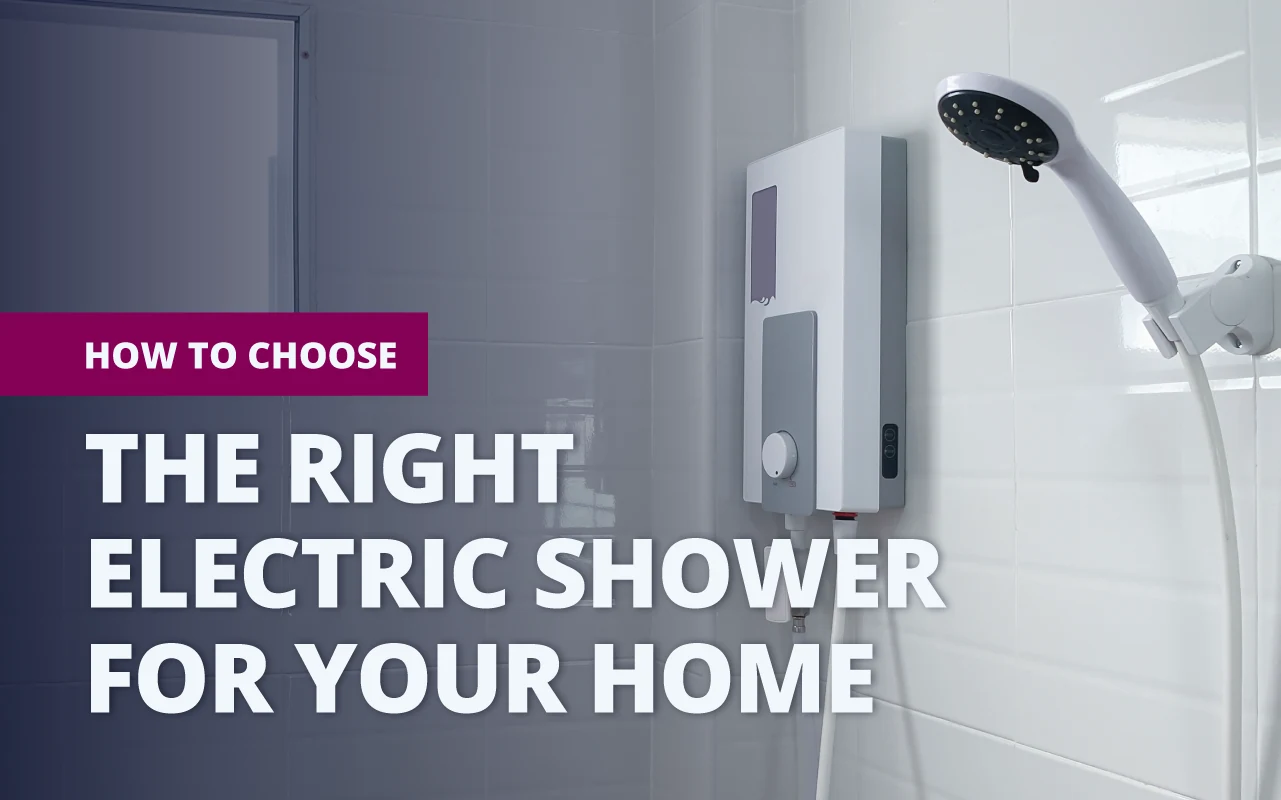
An electric shower heats cold mains water on demand using a built-in heating element, so you're never waiting for a boiler to catch up or a hot water tank to refill. You turn it on, cold water flows over the element, and hot water comes out of the shower head within seconds.
That simplicity is exactly what makes them one of the most popular shower types in UK homes. They work independently of your boiler, they're compatible with virtually every water system, and they only heat the water you actually use.
But "electric shower" covers a wide range: wattages from 7.5kW to 10.5kW, manual and thermostatic temperature controls, budget models under £100, and premium units above £500. Picking the wrong wattage means weak flow in winter or unnecessary rewiring costs. Picking the wrong type for your water system means poor performance from day one.
This buying guide breaks down what actually matters: how electric showers work, which wattage suits your household, how your water pressure affects performance, what the installation involves, and what it all costs to run.
How Electric Showers Work
Every electric shower follows the same basic principle: Cold water from your mains supply enters the shower unit, passes over an internal heating element, and comes out at your chosen water temperature. The entire process happens on demand: the element only activates when you turn the shower on, making it similar in concept to a tankless water heater designed specifically for showering.
The heating element's power is measured in kilowatts (kW). A higher kW rating means the element can heat water faster, which translates directly into stronger water flow at the same temperature. A 10.5kW unit pushes out roughly twice the flow rate of a 7.5kW unit in winter, because it applies more heat to the same incoming cold water supply.
Because electric showers only connect to the cold mains, they don't draw from your hot water cylinder or depend on your boiler. Your central heating and radiators can run simultaneously without affecting your shower, and you'll still get instant hot water even if the boiler breaks down. That independence is one of the main reasons people choose this type of shower over a mixer shower or power shower.
One trade-off is that, because the element heats water as it passes through (rather than drawing from a pre-heated tank), flow rates are lower than you'd get from a high-pressure mixer shower connected to an unvented system. The next section covers exactly what to expect from each wattage.
Electric Shower Wattage Guide: 7.5kW to 10.5kW
Wattage is the single biggest factor in your shower experience. It determines how much hot water comes out of the electric shower head per minute, and that flow rate changes with the seasons: incoming mains water is colder in winter, so the element works harder and flow drops.
Here's what each wattage delivers:
7.5kW |
8.5kW |
9.5kW |
10.5kW |
|
Summer flow rate |
~4.5 lpm |
5.5 lpm |
6.2 lpm |
6.8 lpm |
Autumn flow rate |
~3.5 lpm |
4.1 lpm |
4.5 lpm |
5.0 lpm |
Winter flow rate |
~3.0 lpm |
3.3 lpm |
3.7 lpm |
4.1 lpm |
Cable size |
6mm² |
6mm² |
10mm² |
10mm² |
MCB rating |
40A |
40A |
45A |
45A |
Best for |
Single occupancy, light use |
One- to two-person households |
Two- to four-person households |
Larger households, higher demand |
Flow rates measured at 42°C outlet temperature on a 240V supply. 7.5kW figures are approximate; 8.5–10.5kW data from Triton's published seasonal flow chart. Cable sizing based on BS 7671, Method C (clipped direct), 30°C ambient.
The jump from 8.5kW to 9.5kW is an electrical upgrade. At 8.5kW and below, your shower runs on a 6mm² cable with a 40A MCB. Step up to 9.5kW, and you'll need 10mm² cable and a 45A MCB, which means rewiring if your existing circuit isn't rated for it. That cabling difference is the main reason the 8.5kW electric shower is the UK's most popular wattage: it delivers reasonable performance without requiring heavy electrical work.
At 10.5kW, you also need stronger mains pressure (at least 1.5 bar at 11 litres per minute inlet flow) compared to one bar at 8 lpm for lower wattages. If your mains supply can't deliver that, a powerful electric shower won't perform to spec regardless of the kW rating.
Water Pressure and Your Water System
Electric showers connect to the cold mains only, which means they bypass your hot water supply entirely. But the type of water system in your home still affects performance, because it determines what mains pressure your shower actually receives.
Gravity-Fed Systems |
Combi Boiler Systems |
Mains-Fed (Unvented) Systems |
Cold water tank in the loft feeds a hot water cylinder. Most common in older UK homes. |
Heats water on demand with no separate cylinder or tank. |
Pressurised cold and hot water supplied directly from the mains. |
Electric showers bypass the gravity system entirely: they connect to the cold mains, not the low-pressure tank supply. Performance depends on your mains pressure, not the height of the tank. |
Fully compatible. The electric shower operates independently of the boiler, which makes it a useful backup if the boiler fails. |
Ideal pairing. Consistent high-pressure cold water means your electric shower performs at its best year-round. |
If mains pressure sits below 1 bar, consider a pump-assisted electric shower (like the Mira Elite SE, which runs on as little as 0.008 bar). |
No special requirements. Standard mains-pressure electric showers work perfectly. |
No special requirements. Any wattage performs well on these systems. |
The practical upshot: if you're in an older property with a gravity-fed system and you're worried about low water pressure, don't rule out an electric shower. You just need to either confirm your mains cold supply delivers at least one bar, or choose a model with a built-in pump designed for low-pressure installations.
Electric Shower vs. Mixer Shower
These are the two most common shower types in UK bathrooms, and they work in fundamentally different ways.
An electric shower heats cold mains water on demand with its own heating element. A mixer shower blends pre-heated water from your hot water supply with cold water to reach the right temperature. That distinction drives every other difference between them.
Electric Shower |
Mixer Shower |
|
Water source |
Cold mains only |
Hot water supply (boiler or cylinder) + cold water |
Flow rate |
3–7 lpm depending on kW and season |
8–15+ lpm on high-pressure systems |
Temperature control |
Manual dial or thermostatic |
Typically thermostatic |
Installation |
Dedicated electrical circuit + cold water connection |
Hot and cold water connections (no separate electrical circuit) |
Running cost |
Only heats water you use |
Depends on boiler efficiency |
Best for |
Homes with limited hot water, en suites, rental properties |
Homes with reliable high-pressure hot water |
Power showers are a specific type of mixer shower with a built-in pump to boost flow. They're designed for gravity-fed systems where the hot water supply comes from a cylinder. You can't use a power shower on a combi boiler system because the pump interferes with the boiler's flow sensor.
Thermostatic models (available for both electric and mixer showers) maintain a set water temperature even if someone flushes a toilet or runs a tap elsewhere in the house. If you've got young children or elderly residents, thermostatic temperature control is worth the extra cost for the scald protection alone.
What To Look for When Shopping
Once you've settled on a wattage and confirmed your water system is compatible, here's what separates a good electric shower unit from a disappointing one.

Thermostatic vs. manual temperature settings
Manual showers use a dial to adjust the water temperature, but the output shifts if mains pressure fluctuates. Thermostatic models actively regulate temperature within ±1°C, which costs more but eliminates cold spikes and hot surges. Households with children: Look for the BEAB Care mark on thermostatic models.

Shower head and spray patterns
Budget models typically ship with a single-spray shower head. Mid-range and premium units often include a multi-spray handset (four or five settings) with rub-clean nozzles for easier limescale maintenance. Some brands use air-infusion technology to create fuller water droplets from less water, which improves the shower experience without increasing flow. The shower head makes more difference to day-to-day comfort than most people expect.

Limescale protection
If you're in a hard water area, look for models with built-in limescale defences. Some systems reduce calcium buildup inside the unit, extending the shower's lifespan and maintaining flow performance over time.

Dual outlet capability
Some premium electric shower units offer a dual outlet, letting you switch between a fixed overhead sprayer and a handheld shower head. It's a practical feature if you're fitting a walk-in shower enclosure or want flexibility in how you shower.

Build quality and finish
Entry-level models are usually white plastic. Step into the mid-range and you'll find stainless steel, brushed chrome, and glass-fronted designs. The finish doesn't affect performance, but it does affect how the shower looks five years on (and whether it matches the rest of your bathroom).

Wall-mounted installation footprint
If you're replacing an existing electric shower, check the unit dimensions. Complete shower kits that include a riser rail, hose, and handset save you from buying those parts separately.
Browse the full electric shower range at QS Supplies to compare models across every wattage and budget.
Installation Requirements Checklist
Electric shower installation isn't a casual weekend project. The electrical work falls under Part P of the Building Regulations in England and Wales, which means it must be carried out (or at least certified) by a qualified electrician registered with a competent person scheme.
Here's what the installation involves, step by step:
-
Dedicated radial circuit. Every electric shower needs its own circuit running directly from the consumer unit. You can't share it with other appliances.
-
Correct cable size. 6mm² cable handles showers up to 8.5kW on a standard cable run (clipped direct, under 18 metres). For 9.5kW and above, you'll need 10mm² cable. If the cable passes through thermal insulation or the run is particularly long, your electrician may need to upsize further.
-
MCB or RCBO rating. 40A for showers up to 8.5kW; 45A for 9.5kW and above. Your electrician will confirm the right rating for your specific installation.
-
30mA RCD protection. BS 7671 (the IET Wiring Regulations) requires all bathroom circuits to have 30mA RCD protection. Modern installations typically use an RCBO that combines overcurrent and residual current protection in one device.
-
Cold water mains connection. The shower needs a connection to the cold mains supply (not a gravity-fed tank). A plumber can handle this part of the job.
-
Minimum water pressure. At least 1 bar at 8 lpm for showers up to 9.5kW; at least 1.5 bar at 11 lpm for 10.5kW units. Your plumber can test this with a pressure gauge.
-
Isolation switch. A ceiling-mounted pull-cord isolator switch rated for at least 45A, positioned outside the shower zone.
Can You DIY It?
The plumbing side (connecting the cold water supply, fitting the shower head and riser rail) is manageable for a competent DIYer. But the electrical connection isn't optional: an unregistered person carrying out notifiable electrical work in a bathroom risks a fine, invalidated insurance, and complications at house sale.
The cost of professional shower installation typically runs between £150 and £350 for labour (on top of the shower unit price), depending on whether new cabling is required and your location in the UK.
How Much Does an Electric Shower Cost To Run?
Electric showers are among the most energy-efficient ways to wash, because the heating element only runs while water is flowing. Unlike a traditional water heating setup with a hot water tank, there's no stored water losing heat between shower uses.
Here's the running cost breakdown using the current Ofgem price cap rate of 24.67p per kWh (Q2 2026, including VAT):
kW rating |
Cost per minute |
Cost per 8-minute shower |
Annual cost (one shower per day) |
7.5kW |
3.08p |
24.7p |
~£90 |
8.5kW |
3.49p |
28.0p |
~£102 |
9.5kW |
3.91p |
31.2p |
~£114 |
10.5kW |
4.32p |
34.5p |
~£126 |
The formula is:
Multiply the kW rating by the electricity tariff (in pence per kWh), then divide by 60 to get the cost per minute. For an 8.5kW shower at 24.67p/kWh, that's 8.5 × 24.67 ÷ 60 = 3.49p per minute.
For context, filling a standard bath uses roughly 80 litres of hot water. Heating that volume through a boiler at the same electricity rate costs significantly more than an eight-minute electric shower, which uses between 10 and 15 litres depending on your kW rating. That's the core energy efficiency argument: less water heated, less energy used.
A household of four taking one shower each per day on a 9.5kW unit would spend roughly £456 a year. Cutting the average shower from eight minutes to six saves around £28 annually on that same unit, which isn't dramatic on its own but adds up over the shower's seven to 10 year lifespan.
Your Next Shower Upgrade Starts Here
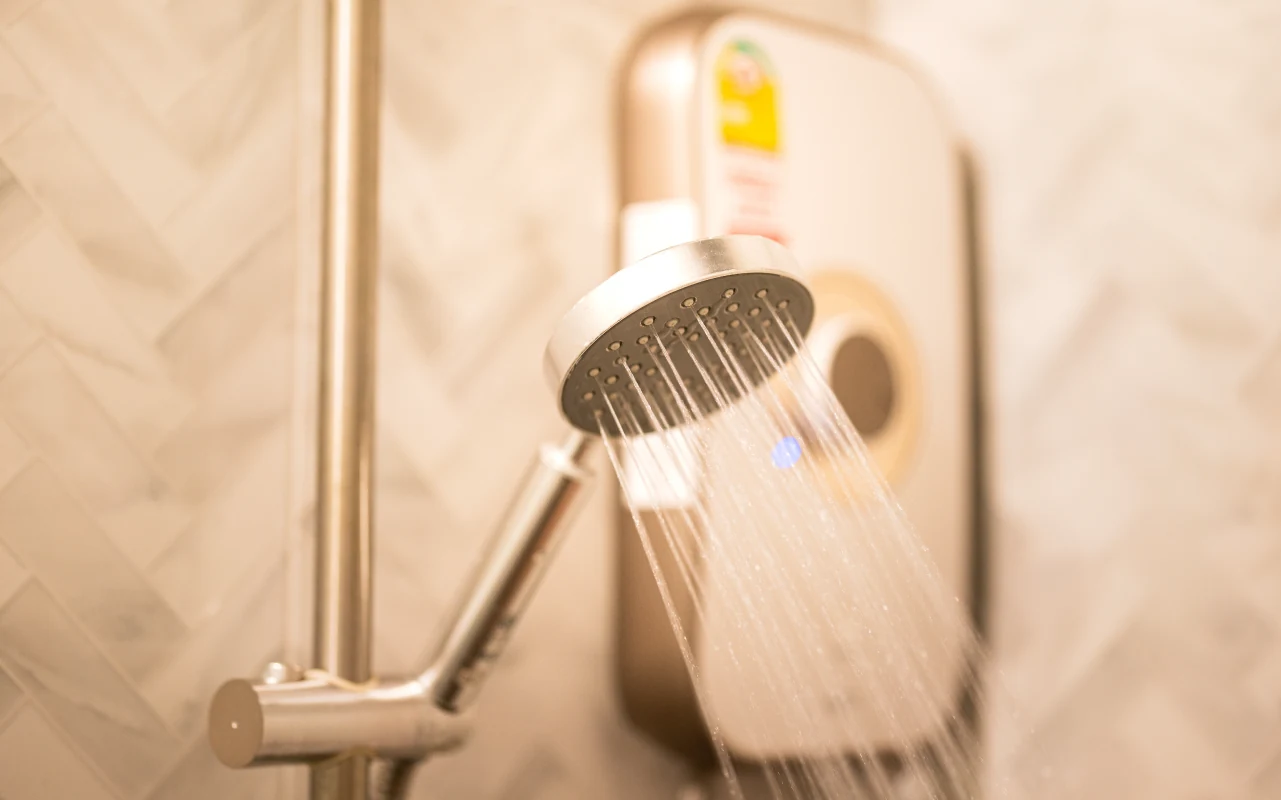
Choosing the right electric shower comes down to three things: matching the wattage to your household size (and accepting the cabling implications), confirming your mains water pressure can support it, and getting a qualified electrician to handle the installation.
Everything else (finish, spray patterns, thermostatic vs manual, brand) is personal preference backed by budget. A £85 Triton Seville does the same fundamental job as a £600 Mira Galena; you're paying for temperature precision, build materials, and design.
If you're replacing an existing electric shower, measure your current unit's footprint and check the cable size behind it before ordering. If you're installing from scratch, get the electrician booked before the shower arrives so the circuit is ready.
Explore the complete electric shower collection at QS Supplies to find the right model for your home.
Frequently Asked Questions
Here are the questions we hear most from customers shopping for an electric shower.
- Can I upgrade from 8.5kW to 10.5kW without rewiring?
- Do I need a plumber or an electrician to fit an electric shower?
- How much does an electric shower cost to run?
- Is it worth getting an electric shower?