
 0
0 Clearance Sale
  Brands


Water is essential to everyday life, but many of us rarely consider how much of it we use — or waste — at home. In the UK, households are often unaware of the litres of water flowing unnoticed down the drain daily. This analysis explores how water is consumed in the home, where the biggest losses occur, and how simple changes can lead to major savings.
Using authoritative data from trusted public sources, we aim to promote smarter water use and more sustainable living. Understanding the amount of water used every day is crucial to improving your household water efficiency and lowering your costs.
Key Findings
- Up to 50% of a household's water is used in the bathroom, mostly on showers, baths, and toilet flushes.
- A single leaky toilet can waste over 146,000 litres of drinking-quality water a year.
- The average household in England and Wales now pays £603 per year for water and sewerage services, and costs keep rising year after year.
- Water bills have jumped from £195 to £287 per year in the last 5 years.
- UK bathrooms may be flushing away more than £500 a year just through outdated fixtures, leaks, and long showers.
Where Does All Your Water Really Go?
Our bathrooms are responsible for the majority of household water consumption, making them a prime target for water-saving improvements.
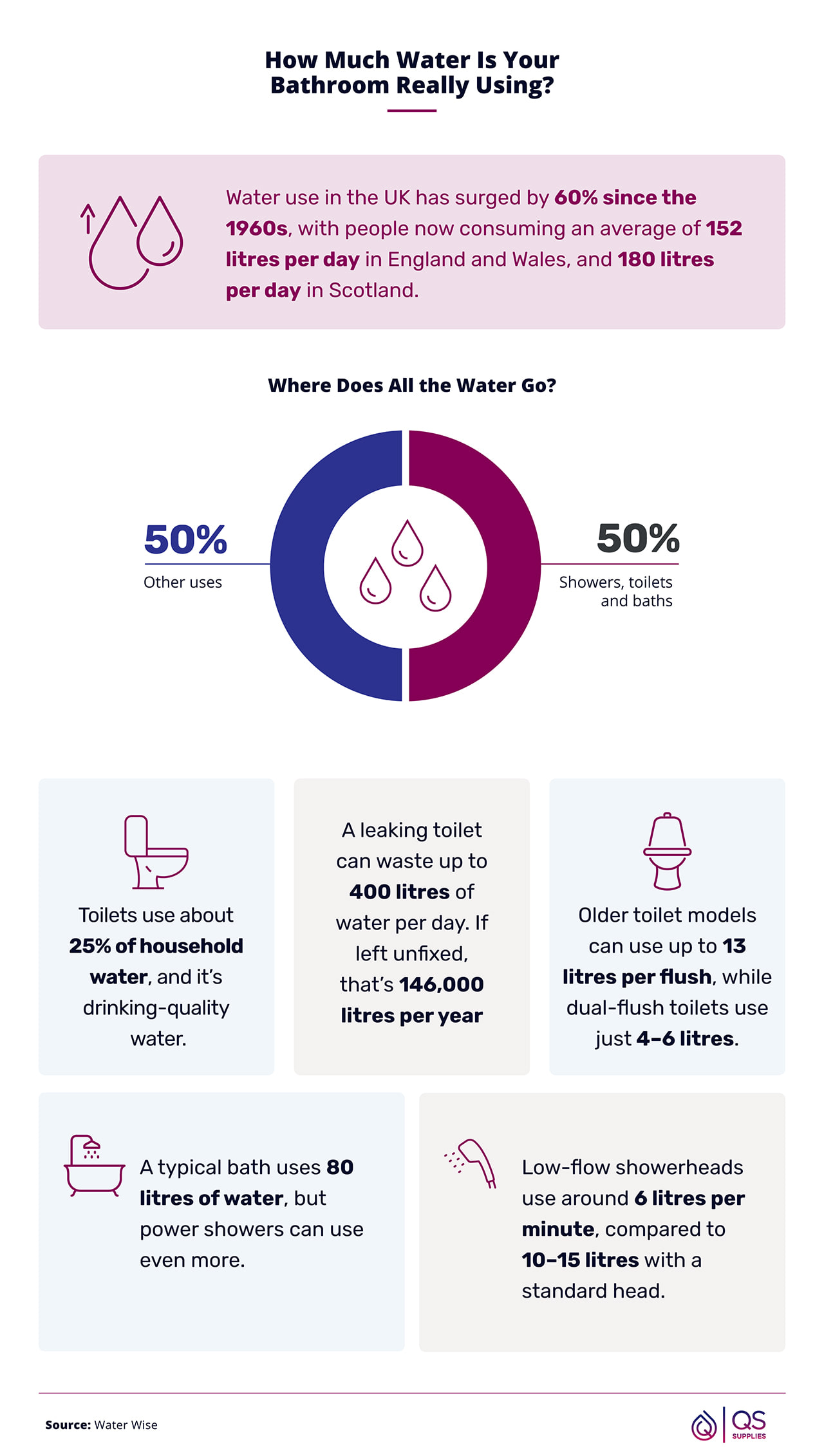
Toilets, showers, and baths are some of the biggest culprits in water consumption, accounting for up to 50% of total household usage. Toilet flushes alone can use 25–30% of household water, while a single full bath can require 80 litres. Using a power shower regularly can further increase the amount of water used. Running taps, whether for brushing teeth, washing up, or rinsing, consume around 6 litres per minute.
Yet, many UK residents underestimate their consumption. According to Water UK, nearly half of Brits (46%) believe their household uses less than 20 litres a day. In reality, one person uses seven times that amount, meaning a family of four could easily use over 500 litres daily. That's a lot of water to account for.
Leaks are a hidden but significant problem. A single leaky toilet can waste more than 146,000 litres of drinking-quality water annually, and according to CCW, average household losses from leaks total 109 litres per day. These figures show the impact even a minor dripping tap or faulty flush can have on your water meter readings and bills. Paying attention to the functionality of bathroom fittings is key to avoiding waste.
Appliances also contribute. As reported by CCW, a standard washing machine uses about 50 litres per cycle, though newer models on eco settings reduce this to 35 litres. Dishwashers average 10–14 litres per load, but older units or washing up by hand under a running tap can significantly increase this.
UK Water Bills Are Rising — Fast
Maintaining the UK's water infrastructure, from treatment plants to sewerage systems, is costly, and the cost is being passed onto consumers.
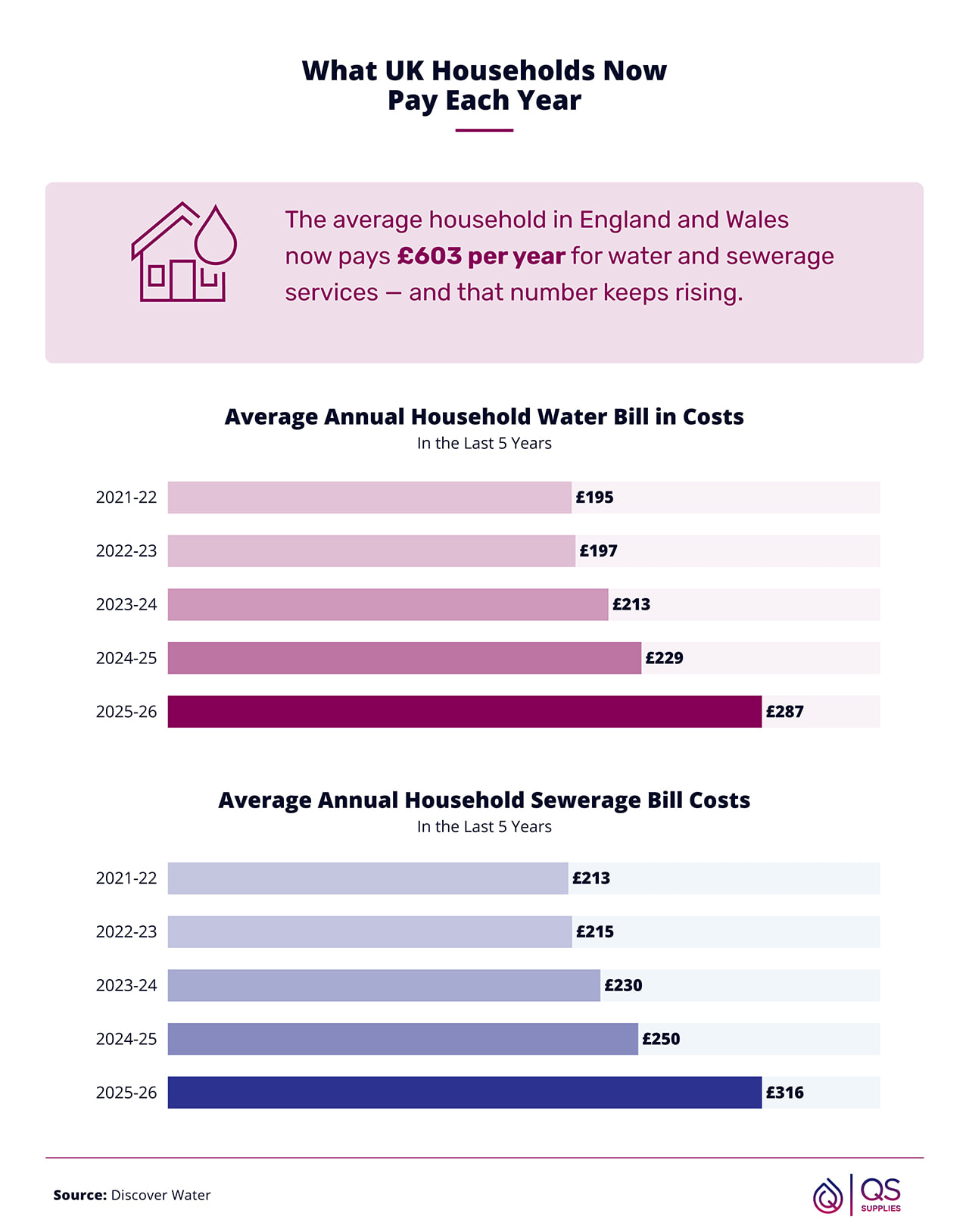
The average water bill in England and Wales now stands at £603 per year, divided between water supply (£287) and sewerage (£316) services. This represents a steep increase over the past five years. From 2021 to today, water supply bills jumped from an average of £195 to £287 annually, while sewerage service costs went up from £213 to £316 over the same period.
These water supply costs cover an extensive network that includes gathering water from rivers and underground sources, storing and treating it, and distributing it to homes. Maintaining high water quality across this system is another reason for the expense.
On the sewerage side, charges include collecting wastewater, treating it safely, and returning it to nature. Energy recovery from sewage solids (i.e., converting it into gas for energy) is also factored into the bill, as is the building and maintenance of sewer pipes.
As usage rises and infrastructure ages, these numbers are only expected to increase, placing greater importance on water efficiency and smarter household choices. Using less water and making efficiency upgrades are the most straightforward ways to manage rising costs.
Cost-Saving Fixes
Upgrading to water-efficient features and fixing leaks is eco-friendly and economically savvy. Here are our top tips and how much they could save you in water usage and pounds.
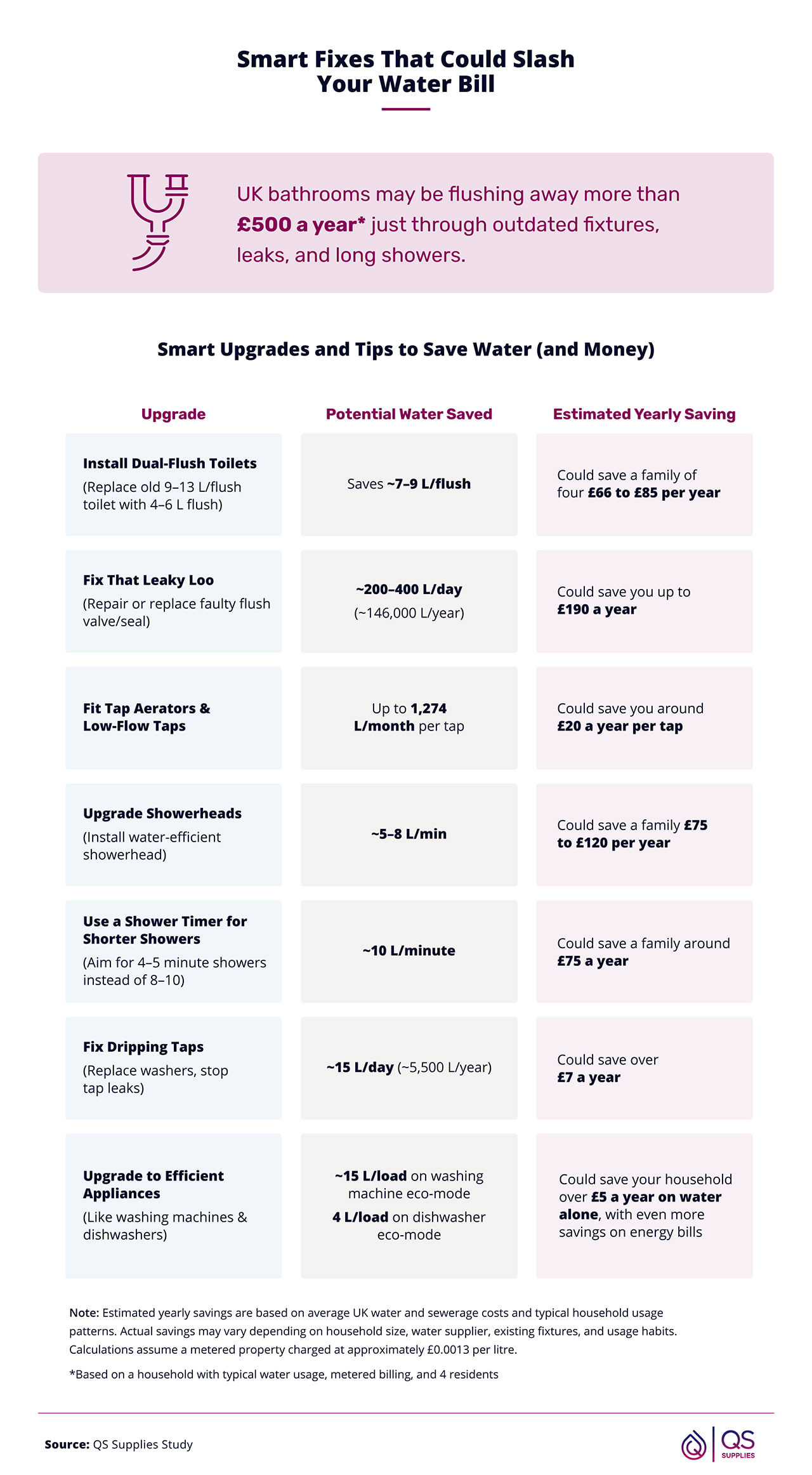
Outdated fixtures, leaks, and habits like long showers can cost UK households over £500 per year in wasted water. Even without major renovations, small changes can create meaningful savings on your water bill.
Household leaks are a prime area for improvement. Fixing or replacing a dripping tap or faulty flush valve is a fast and effective way to cut back on water consumption. According to Yorkshire Water, leaky toilets alone can waste double the average amount of water a person uses each day. Regular checks can ensure every feature in your bathroom is functioning as it should.
Appliances can offer further savings. An eco wash on a washing machine conserves about 15 litres per load, and eco dishwashing cycles save around 4 litres. These tweaks might only reduce your bill by £5 a year in water costs, but they also reduce energy use, supporting both your wallet and sustainability goals.
Changing how you use water in the shower can also have a huge impact. For example, cutting shower time in half (from 10 minutes to five) could save North West households up to £740 a year when water and energy savings are combined. A simple swap to a water-efficient showerhead could also save a family £75 to £120 annually.
A water meter can help you track your usage and adjust your habits to reduce water waste. CCW estimates that basic upgrades and leak fixes could result in savings of around £200 annually.
Even better, many water companies also offer free water-saving kits to their customers, which can include practical tools like cistern displacement devices for toilets and shower timers. These items are designed to help households reduce their water usage easily and efficiently, often with minimal changes to daily routines.
Methodology
This campaign combines public datasets and reputable noncommercial sources to analyse household water usage and identify key savings opportunities for UK residents. All usage and cost estimates are based on data from the following sources: Waterwise, Consumer Council for Water (CCW), Discover Water, Yorkshire Water, Airdri, and Lime Kitchen and Bathroom.
Calculations assume a metered household of four with standard usage patterns (using ~221,000 litres annually) and are based on an average water cost of £0.0013 per litre, derived from the current £287/year average bill. All monetary savings reflect water cost only and do not include additional energy savings unless explicitly stated.
Water-saving estimates were calculated using the difference in litres saved per device/upgrade multiplied by average household usage frequency (e.g., flushes per day, minutes per shower). Appliance efficiency comparisons are based on per-cycle averages in older vs. newer models under typical usage conditions.
About QS Supplies
QS Supplies is one of the UK's leading bathroom retailers, offering high-quality, stylish, and water-efficient solutions that support sustainable living. Whether you're upgrading to a dual flush toilet, a modern showerhead, or need functional bath taps, our range helps you reduce waste without compromising on design. Explore our full collection of bathroom furniture to start saving today.
Fair Use Statement
This content is intended for noncommercial use. If you wish to share or reference it, please provide proper attribution with a link back to QS Supplies.