
 0
0 Clearance Sale
  Brands


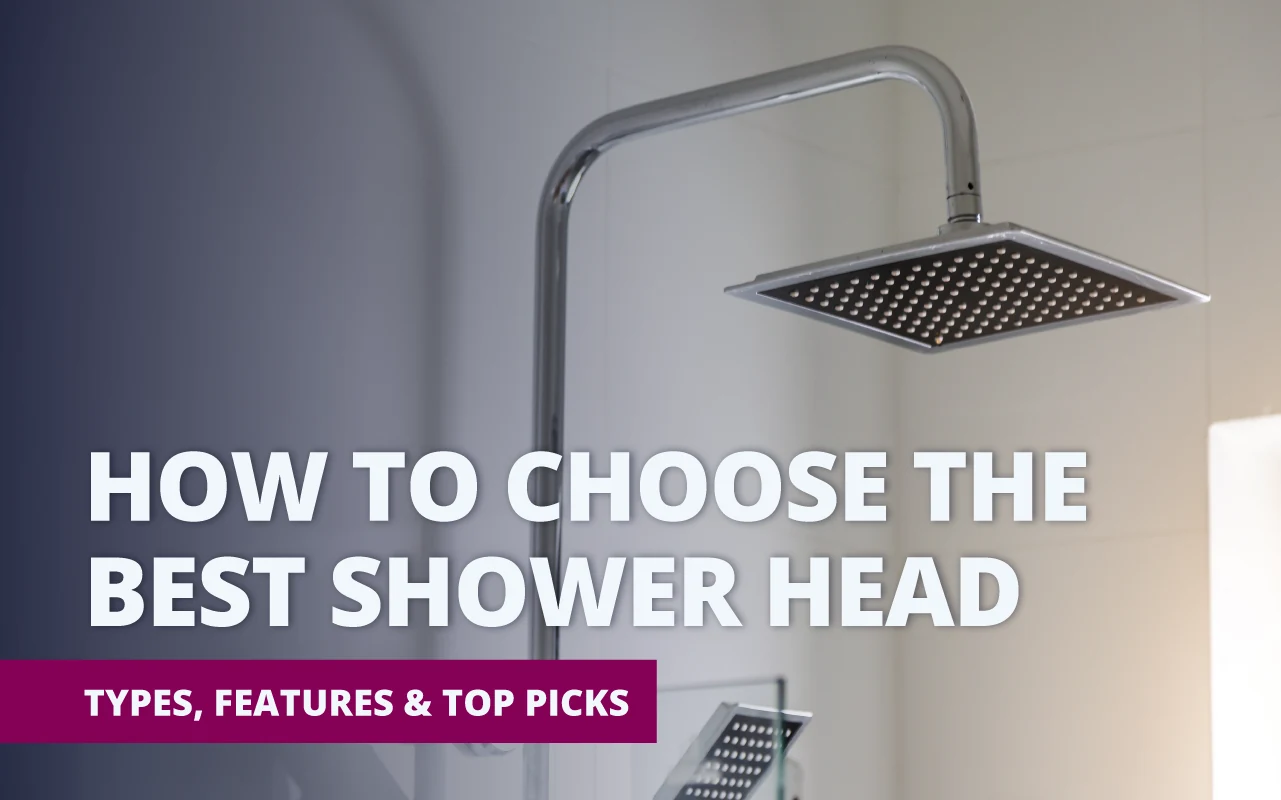
You use your showerhead every day, and yet most people spend less time choosing it than they do picking a bath mat. With so many showerheads on the market, from fixed overhead panels to rainfall heads, handhelds, dual systems, and body jets, it is easy to feel overwhelmed before you've even measured your shower enclosure.
Add in the fact that UK homes run on very different water systems, combi boilers, gravity-fed tanks, and unvented cylinders, and the wrong choice can mean spending good money on a head that never performs as advertised. This buying guide covers everything you need: showerhead types, size, water pressure compatibility, finishes, water efficiency, and maintenance, so you can choose with confidence.
Which Showerhead Is Right for You?
The right showerhead depends on your space, water pressure, and household needs. Here’s a breakdown of the main types and what they offer:

Fixed showerheads
Simple, wall-mounted, and space-saving; it’s ideal for minimalist bathrooms but not adjustable for different heights or easy cleaning.

Rainfall showerheads
Deliver a wide, overhead spray for a spa-like feel but requires strong water pressure (1.5–2 bar) and enough enclosure space.

Handheld showerheads
Highly versatile, detachable, and adjustable, making them ideal for families, accessibility, and cleaning.

Dual showerheads
Combine fixed or rainfall with a handheld for maximum flexibility but need higher water flow and more installation space.

Body spray jets
Wall-mounted jets for a spa-style experience, best suited to high-pressure systems and used alongside other showerheads.
Water Pressure Compatibility: The Most Important Factor UK Buyers Miss
Choosing a showerhead that matches your water system is essential for performance. Here’s what you need to know:
Check your pressure first. A simple flow test or a pressure gauge reading in bar helps confirm compatibility.
Read product specifications. Always match the showerhead’s minimum pressure requirement to your system.
Electric shower exception. These require specific low-resistance handsets and are not compatible with standard high-flow heads.
Combi boiler systems. Typically 1–3 bar, compatible with most showerheads, though very large rainfall or dual setups may underperform at lower pressure.
Gravity-fed systems. Usually 0.1–0.3 bar, requiring low-pressure showerheads or a pump to achieve adequate performance.
Unvented cylinder systems. High pressure (2–4 bar) supports all shower types, though very high pressure may need a reducing valve to control flow.
Showerhead Size Guide: How Big Should Your Showerhead Be?
Showerhead diameter is one of the most underappreciated decisions in the buying process. The principle is simple: the head diameter should be proportionate to the shower enclosure size. A head that is too large for the space splashes water off the walls and delivers poor coverage; one that is too small in a generous walk-in underwhelms.
Here are the three most common head diameters and what they suit:
200 mm (8 inch). Ideal for standard 800×800 mm or 900×900 mm shower enclosures. Provides good overhead coverage without excessive splash and is the most common size for fixed heads in a standard bathroom configuration.
250 mm (10 inch). Suited to walk-in enclosures of around 1,000–1,200 mm width. Delivers a noticeably wider coverage than a 200mm head and is the most popular size for mid-range rainfall showerheads in UK bathrooms.
300 mm (12 inch) and above. Best reserved for large walk-in showers or wet rooms with a width of 1,200 mm or wider. At this size, the rainfall effect is genuinely immersive, but the head requires at least 1.5 bar pressure and a large enough enclosure to contain the spray.
Ceiling height also affects the equation when wall-mounting a large overhead head. A 300 mm rainfall head on a shorter shower arm, like 20 cm, will often position the head too far back, behind rather than above the user.
Showerhead Finishes and Materials: Chrome, Matte Black, Brushed Nickel, and More
Your showerhead finish affects both style and maintenance. Here’s a quick breakdown of the most common options:
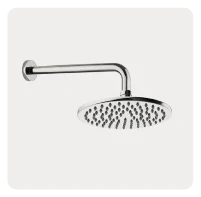
Polished chrome
Timeless, affordable, and easy to clean, but it shows watermarks and fingerprints quickly.
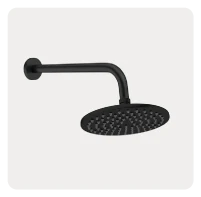
Matte black
Bold and modern, but it highlights soap residue and needs gentle cleaning to protect the finish.
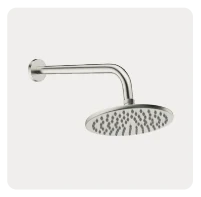
Brushed nickel
Warmer in tone and excellent at hiding fingerprints and watermarks, making it ideal for hard water areas.
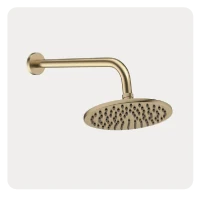
Brushed brass
A premium, warm finish that suits period or statement bathrooms; durability depends on coating quality (look for PVD).
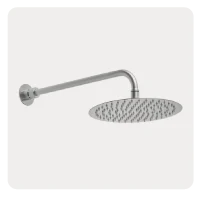
Stainless steel
Highly durable and corrosion-resistant, with no coating that chips or peels over time.
For the best visual result, keep the finish consistent across all shower fittings and bathroom accessories.
Water-Saving Showerheads: Do Eco Heads Sacrifice Performance?
Modern water-saving showerheads reduce water usage without sacrificing performance. Standard showers use around 12–15 litres per minute (LPM), while water-saving models drop below 8 LPM and low-flow options below 6 LPM. They achieve this through aeration, which mixes air into the water stream to create larger droplets that maintain a strong, satisfying spray with less water.
When comparing products, note that UK listings use LPM, while some may show gallons per minute (GPM) where 1 GPM ≈ 4.5 LPM, so checking the LPM figure is the most reliable approach.
Best Showerheads by Need: Our Top Picks
The best showerhead depends on your water pressure, setup, and priorities. Use the guide below to match your needs with the right specifications:
Low water pressure
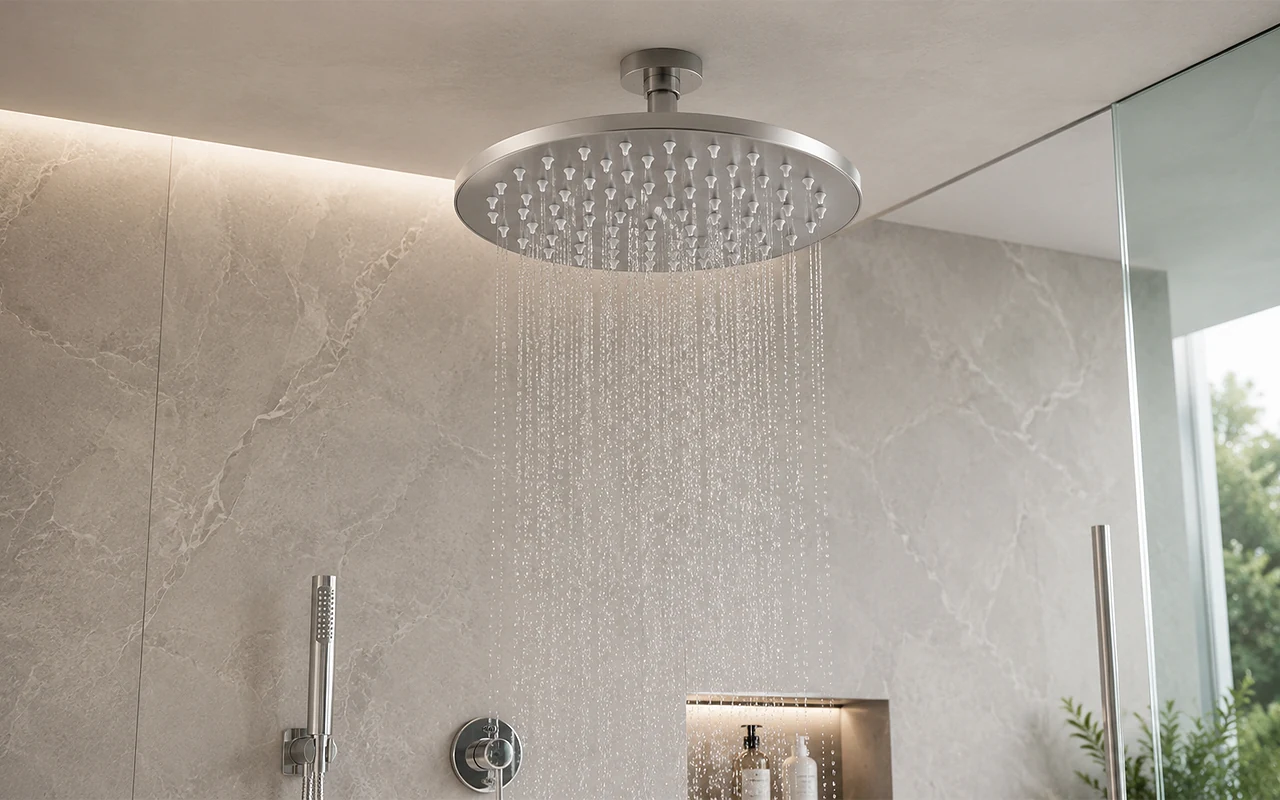
Choose models with a minimum operating pressure of 0.2 bar or lower, plus aeration or restricted nozzles to boost flow; silicone nozzles help prevent limescale build-up.
The Aqua Edition Round Fixed Rain Shower Head (£84.34) is purpose-built for exactly these conditions — its 200 mm circular head (also available in 300 mm) operates between 0.2 and 0.5 bar, making it well suited to low-pressure water systems.
It mimics the natural flow of rainwater through its solid brass construction and polished chrome finish. It arrives ready assembled, comes with all fittings, and is backed by a lifetime warranty guarantee.
Rainfall experience
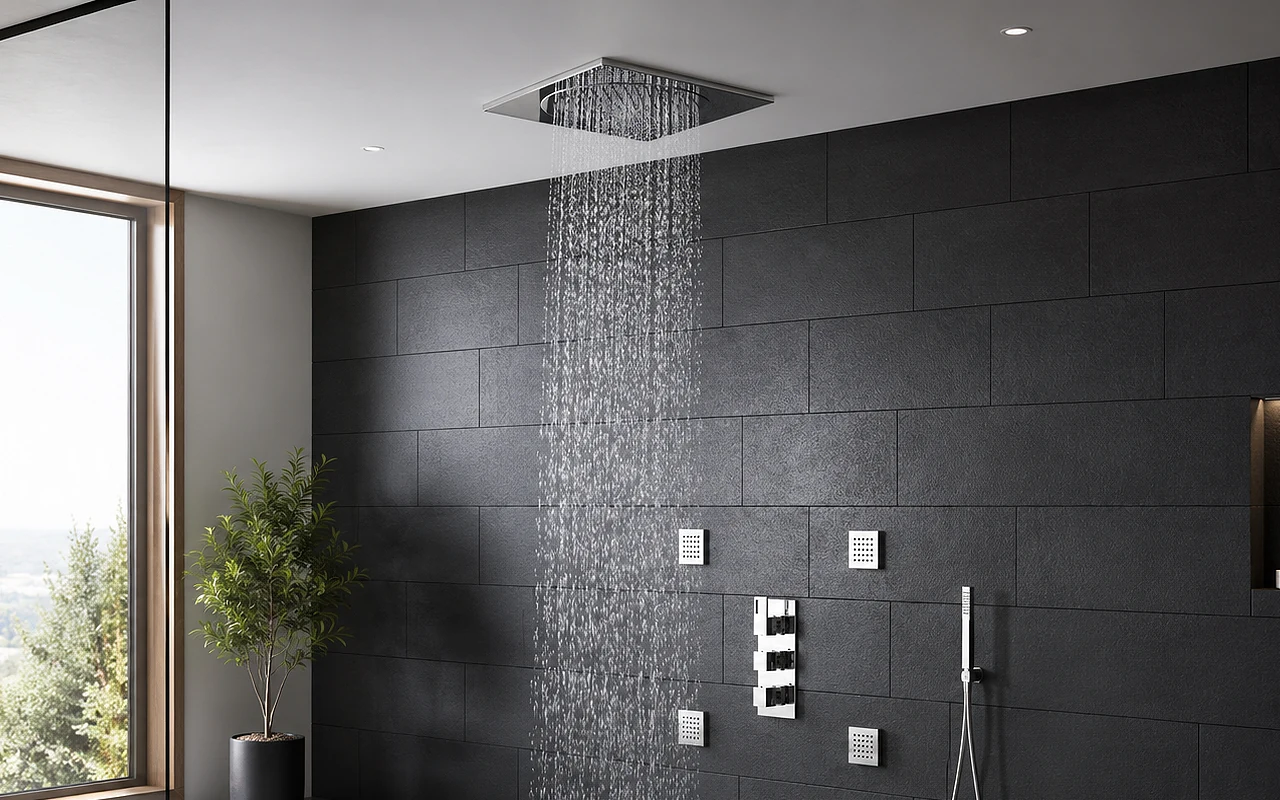
Look for 250mm+ diameter heads, at least 1.5 bar pressure, and ceiling or extended-wall mounting for true overhead coverage.
The Hudson Reed Square Fixed Ceiling Tile Shower Head (£74.51) is a strong example of this done well; its 270 mm square head (also available in 370 mm and 500 mm) delivers genuine rainfall-style coverage, whilst its minimalist design suits contemporary bathrooms.
It's ceiling or wall-mounted, easy to clean, and operates from as little as 0.5 bar, making it suitable for medium-pressure water systems.
Water-saving
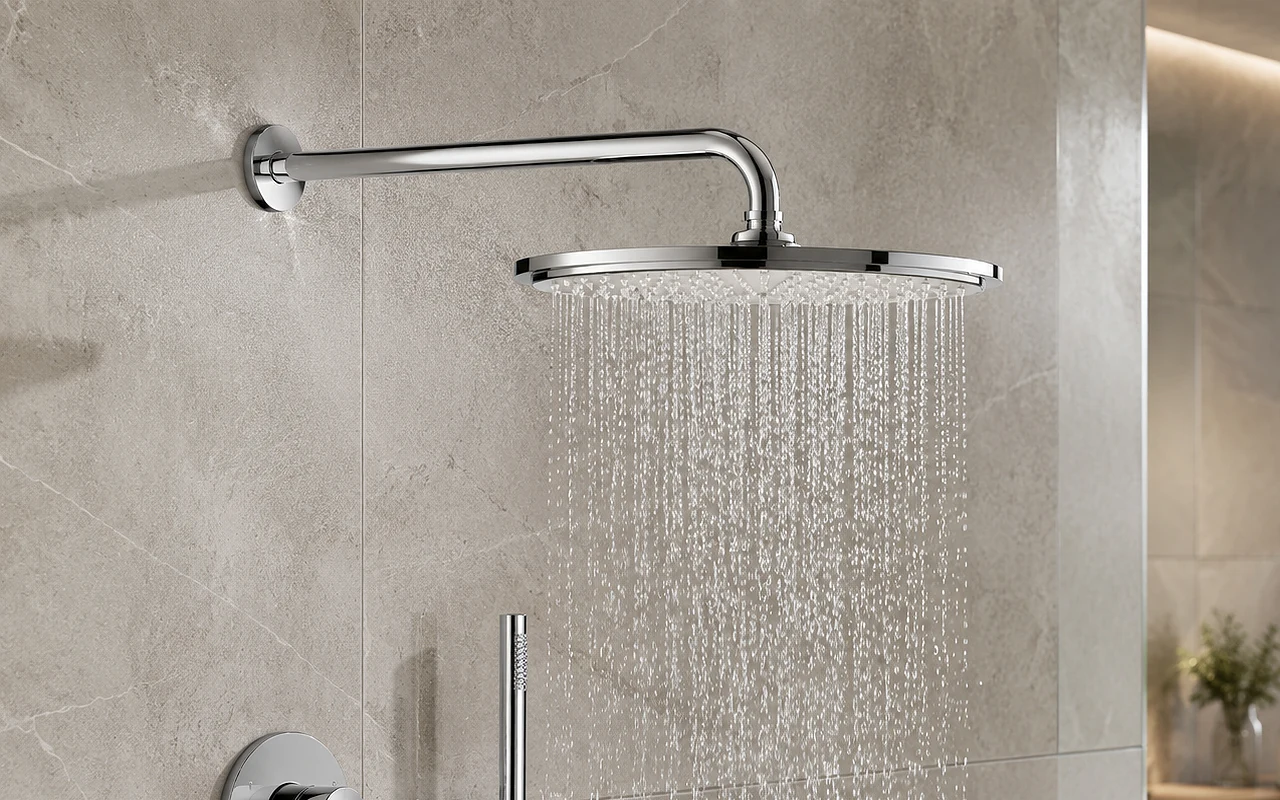
Aim for under 8 LPM (or under 6 LPM for low-flow), with aeration and smart water technology delivering better performance without waste. Not all water-saving showerheads rely on multiple spray settings; some achieve efficiency through engineering instead.
This Grohe rainfall showerhead (£364.85)is a prime example, pairing a generous 310 mm circular head with Grohe's EcoJoy technology, which reduces water consumption by up to 50% whilst maintaining a full, satisfying rain spray.
Accessibility
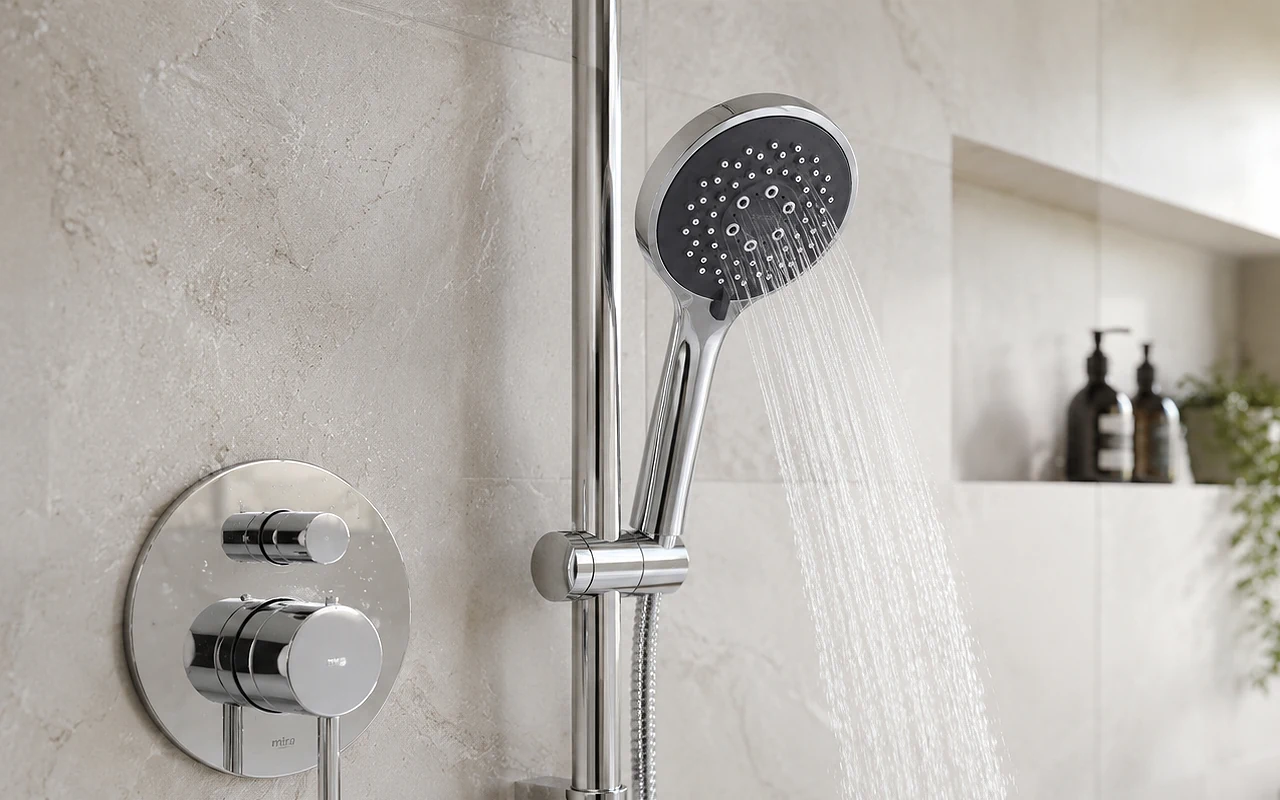
Opt for a handheld head with a 1.5 m+ hose, adjustable height, lightweight design, and easy-to-use controls.
The Triton 8000 DuraFlow Round Shower Handset (£32.36) ticks many of these boxes; its compact 110 mm head and five spray modes offer genuine versatility, whilst its contemporary chrome finish and UK manufacture speak to quality. Backed by a one-year guarantee.
Showerhead Maintenance
Hard water can quickly reduce shower performance, so regular maintenance is essential. Here are some key points to follow:
Wipe weekly. Soak monthly in white vinegar for 30 minutes to prevent limescale build-up (which restricts flow and distorts spray patterns). Avoid abrasive cleaners.
Typically, replace every three to five years, or sooner if flow drops, nozzles clog permanently, or spray becomes uneven.
Replace shower filter cartridges every three to six months to maintain performance.
QS Supplies' shower accessories range includes replacement parts, inline filters, and cleaning accessories for the most common showerhead configurations.
Fitting Your Showerhead: Installation and Compatibility
Most showerhead replacements are simple DIY jobs, as the majority use a standard ½-inch BSP connection. Swapping heads typically involves unscrewing the old unit, attaching the new one, and using PTFE tape to prevent leaks.
More complex installations, such as ceiling-mounted rainfall heads, relocating pipework, or adding new pipe runs, usually require a plumber.
Before buying, check that your existing shower arm suits the size and position of your new head. Larger rainfall heads often need a longer or angled arm to sit correctly. If updating the look, a compatible trim kit can refresh visible fittings without replacing the internal valve.
Finally, confirm compatibility with your system, especially for thermostatic setups, which may require specific showerheads compatible with the valve.
Choose the Right Showerhead for Better Performance Every Day
Choosing the best showerhead comes down to matching your setup with the right specifications. Water pressure, shower type, size, and finish all play a role in how your shower performs day to day. A well-matched head delivers consistent flow, better coverage, and improved efficiency, while the wrong choice can lead to weak pressure or wasted water.
Focusing on key factors, such as system compatibility, flow rate, and practical features like aeration or adjustability, makes the decision far simpler. Whether you want a space-saving fixed head, a versatile handheld, or a full rainfall setup, the right choice should suit both your bathroom and your routine.
For reliable performance, long-term durability, and a wide range of options suited to every water system, explore the selection available at QS Supplies to find a showerhead that fits your needs erfectly.
Frequently Asked Questions
The questions below cover the most common points of confusion when choosing a showerhead, from matching a head to your water system, to understanding flow rate figures, to knowing when a replacement is due.
- What is the best showerhead for low water pressure in the UK?
- How do I choose between a fixed and a handheld showerhead?
- Do rainfall showerheads work with a combi boiler?
- What flow rate showerhead should I buy in the UK?
- How often should I replace my showerhead?
- What is the difference between a showerhead and a shower system?