
 0
0 Clearance Sale
  Brands


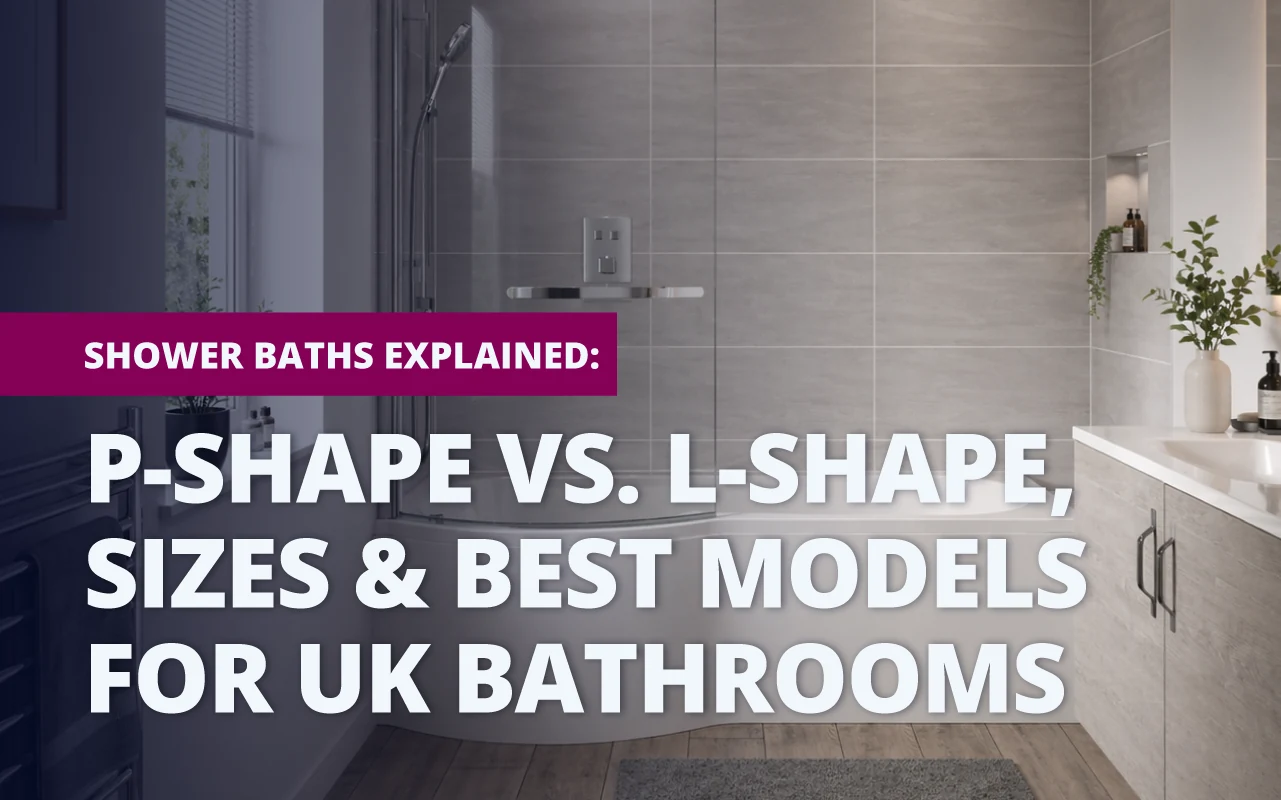
The average UK bathroom measures roughly 2.4 m × 1.8 m, barely enough floor space for a separate shower enclosure and a soaking tub to coexist without one of them being squeezed into a corner. For millions of UK homeowners, the practical answer to that constraint is a shower bath: a single tub shower unit that does both jobs without requiring two separate footprints.
The market is dominated by two shapes, P and L, and choosing between them is the decision that trips up most buyers. This guide covers the shape question, standard UK sizes, materials, what to buy alongside the bath, and top picks from our range of shower baths at QS Supplies, so you can go from confused to confident in one read.
What Is a Shower Bath?
A shower bath, also called a shower bath combo or bath shower combination, is a single bath unit with one end noticeably wider than the other, designed to provide a comfortable standing shower experience enclosed by a bath screen. The wider shower end typically reaches 850 mm at its broadest point, compared to the standard 700 mm width of a straight bath. That extra 150 mm is the difference between a genuine shower experience and awkwardly avoiding the screen.
It's worth distinguishing a shaped shower bath from a standard straight bath with a showerhead attached. A straight shower bath has the same width at both ends, making the showering zone functional but cramped for daily use. P-shape and L-shape shower baths are purpose-engineered to solve that problem.
The core appeal is the best of both worlds: one unit replaces both a walk-in shower and a separate bath, using roughly the same floor area as a standard bath, a compelling proposition for small bathrooms and en-suites. At the premium end, whirlpool and spa versions add hydrotherapy jets to the bath section, delivering a home spa experience from the same footprint.
P-Shape vs. L-Shape Shower Baths
Choosing between P-shape and L-shape comes down to space, layout, and style. Here’s how they compare:

Shower space
The L-shape offers a wider, square showering area; the P-shape is slightly more compact due to its curved design.

Narrow bathrooms
P-shape is better for tight spaces, as the curved edge improves clearance around nearby fixtures.

Door clearance
L-shape’s flat edge can be easier to align with door swings, but always measure to confirm.

Handedness
Both styles come in left- and right-handed versions; matching your layout is essential.
Shower Baths: Which Shape Is Right for You?
Both P-shape and L-shape shower baths serve different bathroom layouts and lifestyles. Here's what each one does best:
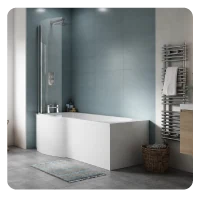
P-Shape
The L-shape offers a wider, square showering area; the P-shape is slightly more compact due to its curved design.
- Ideal for narrow or corridor-shaped bathrooms where the curved end avoids clearance conflicts with nearby toilets or basins.
- Suits a softer, more traditional aesthetic, pairing well with heritage-style taps and accessories.
- The rounded edge is more comfortable to lean over, making it a popular choice for families with young children.
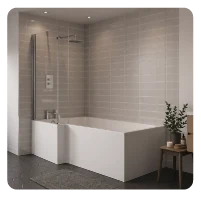
L-Shape
- Delivers the closest approximation to a dedicated walk-in shower, with a square, consistent showering zone.
- The better choice for taller users (particularly those above 5'10") who find a curved end slightly restrictive.
- Suits modern bathrooms with square-format wall tiles, where its flat, right-angled profile aligns cleanly with grout lines for a sharp, contemporary finish.
Shower Bath Sizes: Standard UK Dimensions
Both P-shape and L-shape shower baths are available across the same range of UK standard lengths. The dimensions that matter most are:
Bath length |
Shower end width |
Bath section width |
Best suited for |
1,500 mm |
850–850 mm |
700 mm |
Compact en-suites and bathrooms under 2 m in length |
1,600 mm |
850 mm |
700–750 mm |
Most UK family bathrooms — the most popular size |
1,700 mm |
850–900 mm |
750 mm |
Larger family bathrooms; more comfortable bath length |
1,800 mm |
900 mm |
750–800 mm |
Generous bathrooms; premium/luxury installations |
Make sure to check the shower screen height (typically 1,400–1,500 mm) against the height of any window positioned above the shower end. A screen that cannot be fully opened because it conflicts with the window frame is a problem that is much easier to anticipate than to fix.
Shower Bath Materials: Acrylic vs. Reinforced Acrylic
Most shower baths sold in the UK are made from acrylic, and the distinction that matters most is whether that acrylic is standard or reinforced. The key differences in shower bath materials are durability and stability under daily use:
- Standard acrylic. Lightweight, affordable, and warm to the touch, it retains heat well but can flex underfoot and wear over time.
- Reinforced acrylic. Stronger and more rigid due to added backing; better suited for daily shower use with improved durability and support.
Colour fastness is worth considering at the buying stage. High-quality acrylic retains its finish without yellowing for 10–15 years; cheaper alternatives can discolour within five, particularly in hard-water areas. Warranty length is the clearest indicator of material quality: 20–25 years on the acrylic is standard for reputable products.
What You Need Alongside Your Shower Bath: A Complete Checklist
The bath itself is only part of the installation. Four additional components are required to complete a functional shower bath setup:

Bath screen
The most critical purchase alongside the bath itself; choose a curved screen for a P-shape bath and a straight screen for an L-shape, and confirm it is left- or right-handed to match your bath orientation.

Bath taps and shower valve
A bath shower mixer controls temperature and flow for the shower; bath filler taps fill the bath. Both functions can be combined in a bath filler with a diverter or kept separate for easier individual control; whichever you choose, match the finish (chrome, satin nickel, or stainless steel) across all visible fittings in the bathroom for a coherent look.

Showerhead and hose
A handheld showerhead on a slide rail is the most practical format for a shower bath, as it adjusts to different user heights and can be used detached for rinsing; choose a trim kit that matches your valve and tap finish to avoid a mismatched look.

Bath panel
Covers the exposed sides and ends of the bath and should complement the bathroom flooring and wall finish. Bath panels come in gloss white acrylic, wood-effect, and tiled options; confirm the panel dimensions match your specific bath model before ordering.
Best Shower Baths by Budget: QS Supplies Top Picks
Shower baths vary by price tier, with each level offering different materials, durability, and features based on how the bathroom will be used:
Budget (£300 and under)
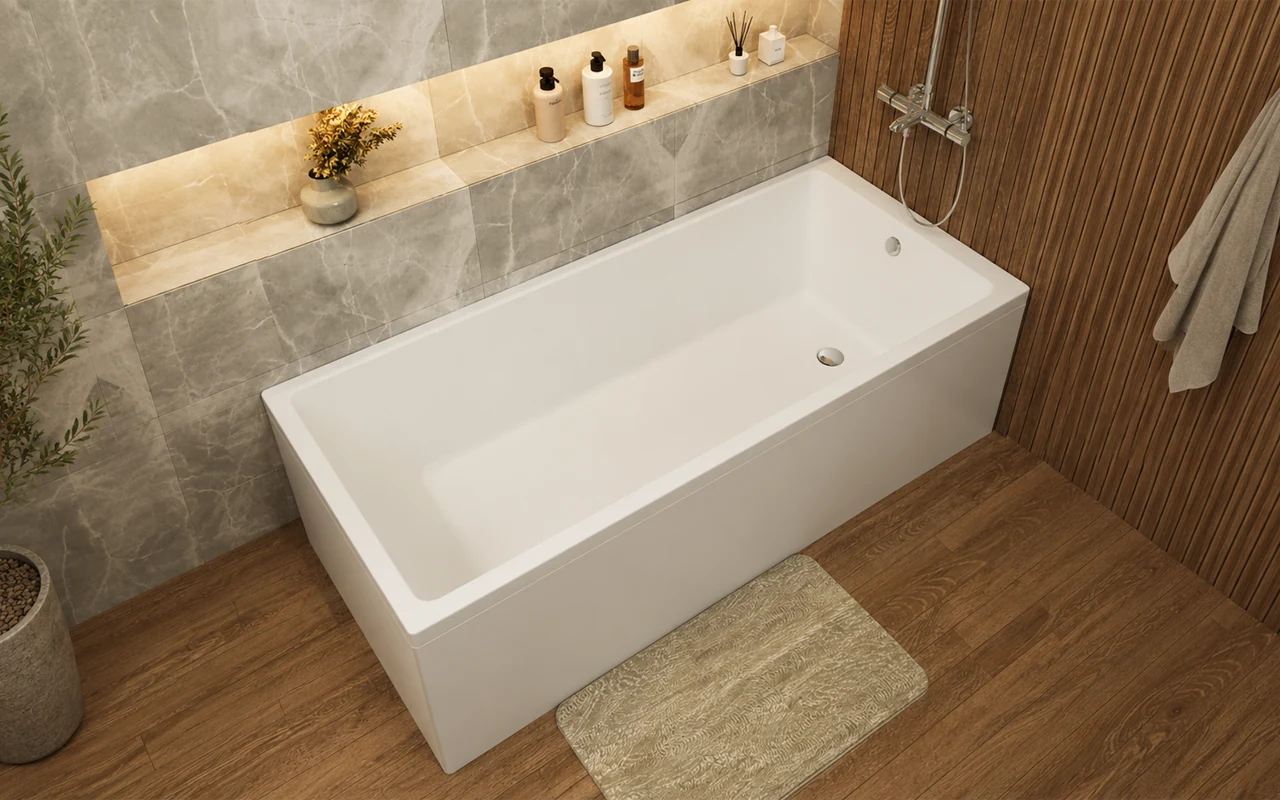
Standard acrylic construction, suitable for rentals or light use; same shapes and layouts as higher tiers but less rigid and shorter warranties.
With a generous 250-litre capacity and a spacious 1,800 mm × 800 mm footprint, this QS Basics single-ended bath (available for £169.47) offers a comfortable, heat-retaining soak in a clean, minimalist thin-edge design. It's undrilled for flexible tap placement, includes a leg set, and is compatible with bath screens and optional front and end panels. The smooth acrylic finish is easy to maintain, and bath waste can be purchased separately. Backed by a five-year guarantee.
Mid-Range (£300–£600)
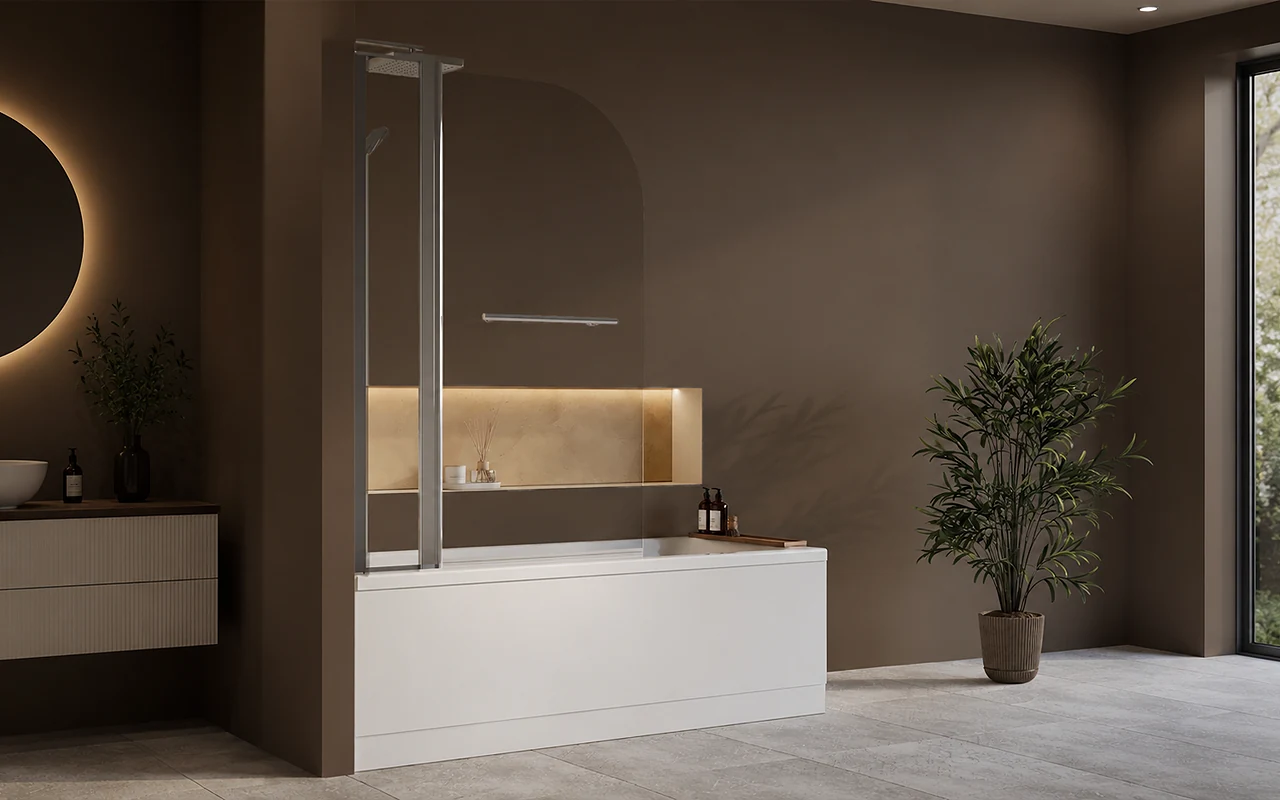
Reinforced acrylic improves strength and durability, offering longer warranties (20–25 years) and more size and layout options, ideal for daily use.
This Nuie square bath (available for £365.60) is a complete bundle: bath, front panel, curved bath screen, and leg set all included, offering excellent value in one purchase. Available in two widths (700 mm or 750 mm), it holds up to 200 litres and features a CE-certified, 4 mm acrylic construction. The semi-frameless screen includes 6 mm safety glass with a fixed and moveable panel for easy access, finished in chrome. Undrilled for full tap flexibility and backed by a five-year manufacturer's guarantee.
Premium (£600+)
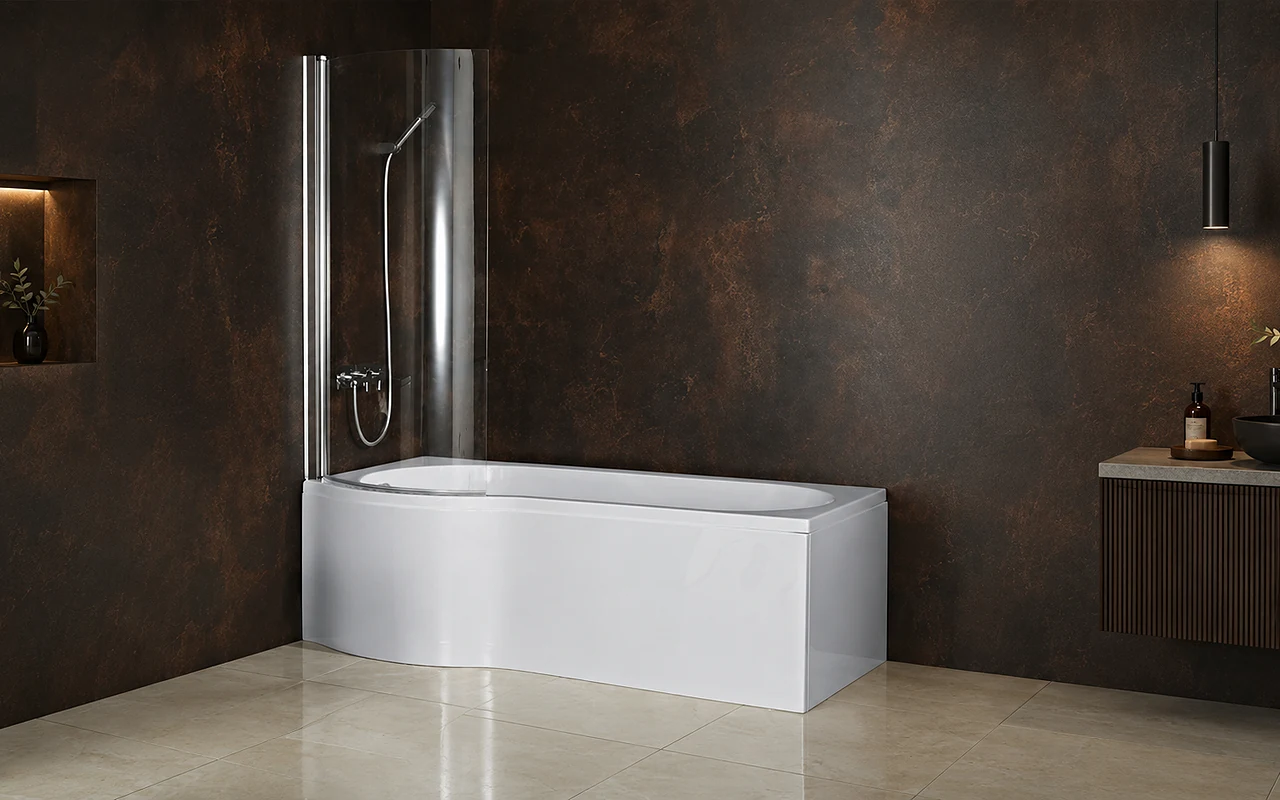
High-end features like whirlpool jets, thicker materials, and larger sizes are designed for maximum comfort and a more spa-like bathing experience.
This Joseph Miles bath, available for £955.00, includes the bath, front panel, and glass screen and is available in whirlpool, airpool, or dual whirlpool-airpool configurations, as well as left- and right-hand variants. The whirlpool system features 12 directional jets, including back-foot jets, two air-flow controls, a safety suction filter, and dry-run pump protection.
Its 210-litre P-shaped tub is undrilled for flexible tap placement, and optional extras include an inline heater and colour dynamic underwater lighting. Backed by a 20-year guarantee on the bath itself.
Solve the Small-Bathroom Problem
A shower bath is one of the smartest investments a UK homeowner can make in a space-limited bathroom. By combining a full soaking tub with a genuinely functional shower zone in a single footprint, it eliminates the need to choose between two essentials you shouldn't have to give up.
Whether you opt for the soft curves of a P-shape to navigate a narrow layout or the clean square lines of an L-shape for a more contemporary feel, the right choice comes down to your bathroom's dimensions, your daily routine, and the aesthetic you're working toward. Pair your bath with a matching screen, coordinated fittings, and a considered tile scheme, and the result is a bathroom that feels intentional and spacious regardless of its size.
Ready to find your perfect shower bath? Browse the full range at QS Supplies and get everything you need, from the bath to the screen, taps, and panels, delivered to your door.
Frequently Asked Questions
- What is the difference between a P-Shape and an L-Shape shower bath?
- Are shower baths suitable for small bathrooms?
- Which gives more shower space: P-shape or L-shape?
- Can you fit a whirlpool in a shower bath?
- What size shower bath do I need?
- Do I need a special screen for a P-Shape bath?