
 0
0 Clearance Sale
  Brands


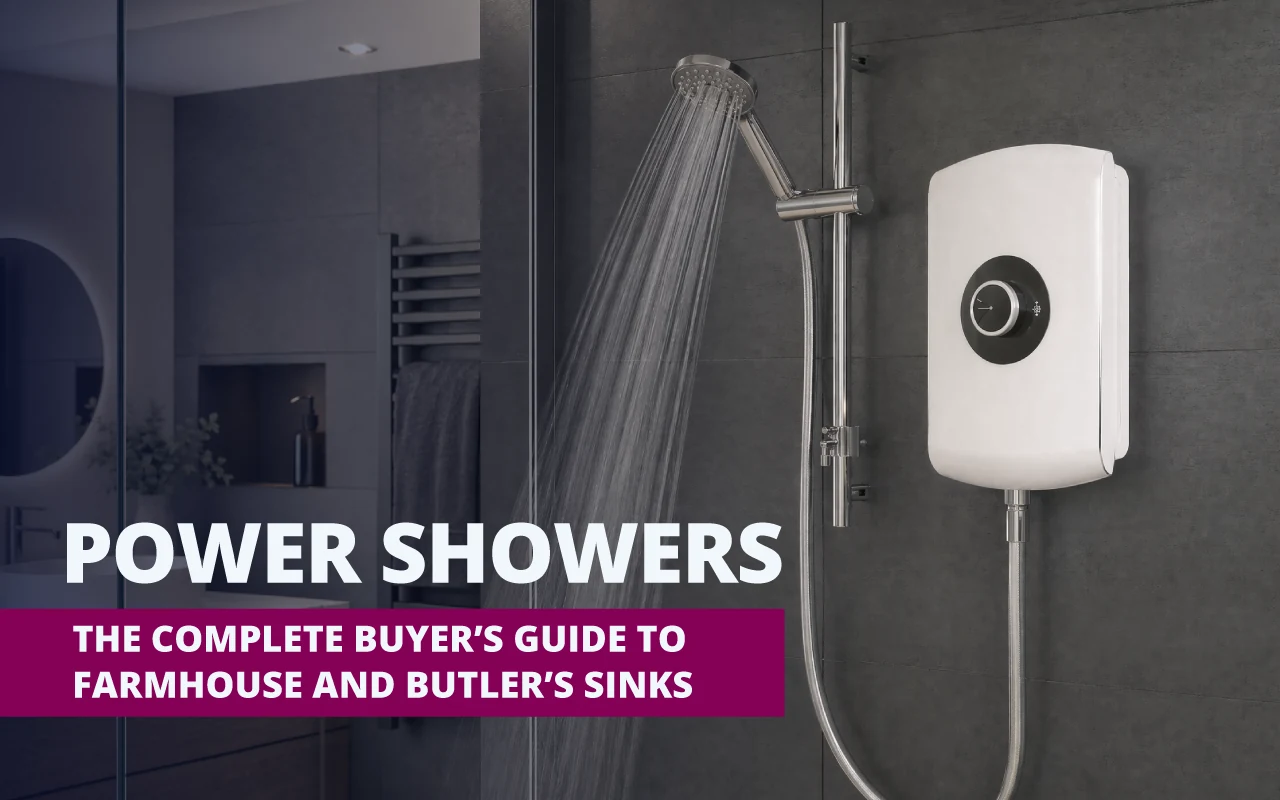
There are few more reliably disappointing ways to start a morning than stepping into a shower that produces barely enough water flow to rinse your hair. In the UK, millions of homes still run on gravity-fed plumbing systems, with a cold-water tank in the loft and a hot-water cylinder in the airing cupboard. While these systems are perfectly capable of heating your water, they are notoriously poor at delivering it with any force.
A power shower is the most effective solution to that specific problem, and this guide covers everything you need to know before buying one: how they work, which water systems they're compatible with (including the costly mistake that trips up the majority of buyers), what installation involves, and the best models available from QS Supplies.
What Is a Power Shower?
A power shower comes with a built-in electric pump that boosts flow rate from a gravity-fed hot water system, transforming a weak, low-pressure trickle into a genuinely powerful showering experience. It draws preheated water from your hot water tank, mixes it with cold water to your desired temperature, and uses the pump to push that mixed water through the head at substantially increased pressure.
The most important thing to understand is what a power shower does not do: it does not heat water. There is no heating element, no boiler. It simply takes the hot water you already have and speeds it up. This means it only works if your home has a supply of stored hot water, and it is entirely dependent on that water supply lasting for the duration of your shower.
The results are significant. A gravity-fed system typically delivers 3–5 litres per minute unaided; a power shower can push that to 10–18 litres per minute, depending on the model. Power showers are also called pumped mixer showers; the terms are interchangeable.
The Most Important Thing To Know: Power Showers and Combi Boilers
This is the most critical point in this guide, because getting it wrong can cost thousands of pounds:
Not "it won't work as well." It will not work at all, and attempting it can cause serious damage to your boiler.
A power shower's built-in pump is designed to boost flow from a low-pressure gravity-fed system and requires a hot water tank to draw from. A combi boiler has no hot water tank; it heats water directly from the mains at mains pressure. Connecting a pump to an already-pressurised supply can blow boiler seals, crack the heat exchanger, and trigger a full boiler replacement. This is a documented failure mode, not a theoretical risk.
This matters because combi boilers now account for approximately 80% of new boiler installations in the UK. If you have one, the right solutions for a more powerful showering experience are a thermostatic mixer shower, a digital shower, or an electric shower, all designed to work with mains pressure without an additional pump.
Which Water Systems Are Compatible With a Power Shower?
Power showers are designed for specific plumbing setups, and choosing the wrong system can lead to poor performance or damage. Here’s how they match with UK water systems:
-
Gravity-fed systems. Fully compatible and ideal use cases; built-in pumps boost low pressure (0.1–0.3 bar) to deliver strong flow but require at least 900 mm head height.
-
Combi boiler systems. Not compatible; these run on mains pressure and should use a mixer or digital showers instead.
-
Unvented systems. Not needed; high pressure (3–5 bar) already provides strong performance, so upgrading the shower head or valve is usually the better solution.
Types of Power Showers: Manual vs. Thermostatic
Power showers come in three main types, each suited to different households and levels of control:
-
Manual power showers. Simple and cost-effective, with user-controlled temperature and flow; it can fluctuate if water demand changes elsewhere.
-
Thermostatic power showers. Maintain a stable temperature automatically, even with other water use.
-
Digital power showers. Premium option with precise controls, remote features, and built-in pumps for gravity-fed systems; must match your water system type.
Power Shower vs. Electric Shower vs. Mixer Shower: Which Is Right for You?
The right shower type depends less on personal preference and more on the water system you already have. Each of the three main shower types is designed for a different plumbing setup, and choosing the wrong one means either poor performance or an incompatible installation. The table below covers the key differences across compatibility, flow rate, running costs, and installation requirements.
Feature |
Power shower |
Electric shower |
Mixer shower (thermostatic) |
How it heats water |
Uses preheated water from the hot water tank |
Heats cold mains water via an internal heating element |
Uses pre-heated water from boiler/cylinder |
Water system compatibility |
Gravity-fed systems only |
Any water system (mains-fed) |
Gravity-fed, combi boiler, unvented |
Typical flow rate |
10–18 LPM |
3–8 LPM |
8–12 LPM (depends on system pressure) |
Water pressure needed |
Low pressure (gravity-fed) |
Low or mains pressure |
Moderate to high (best on combi or unvented) |
Installation complexity |
High — plumbing + electrical supply |
Moderate — dedicated electrical circuit |
Moderate — plumbing connections only |
Running costs |
Moderate (pump uses electricity; water is preheated by boiler) |
Higher (water heated on demand electrically) |
Lowest (no pump; uses existing boiler heat) |
Best for |
Gravity-fed homes with low water pressure |
Any home; universal compatibility |
Combi boiler or unvented systems with good pressure |
Power Shower Installation Requirements
Installing a power shower involves meeting key requirements across your water system, electrics, and plumbing. Here’s what to check before buying:
-
Water system. Requires at least 900 mm head height and sufficient hot water capacity; high-flow showers can quickly drain small cylinders.
-
Electrical supply. Needs a dedicated circuit and correct IP rating; all work must comply with UK Building Regulations and be completed by a qualified electrician.
-
Plumbing setup. Must connect to tank-fed supplies (not mains), with 22mm pipes recommended to support proper flow rates.
Professional installation is advised for new setups or changes; DIY is only suitable for like-for-like replacements with existing connections.
Best Power Showers From QS Supplies: Top Picks by Brand
Mira Showers, Triton, and Aqualisa lead the UK power shower market, each offering distinct strengths depending on budget and performance needs:
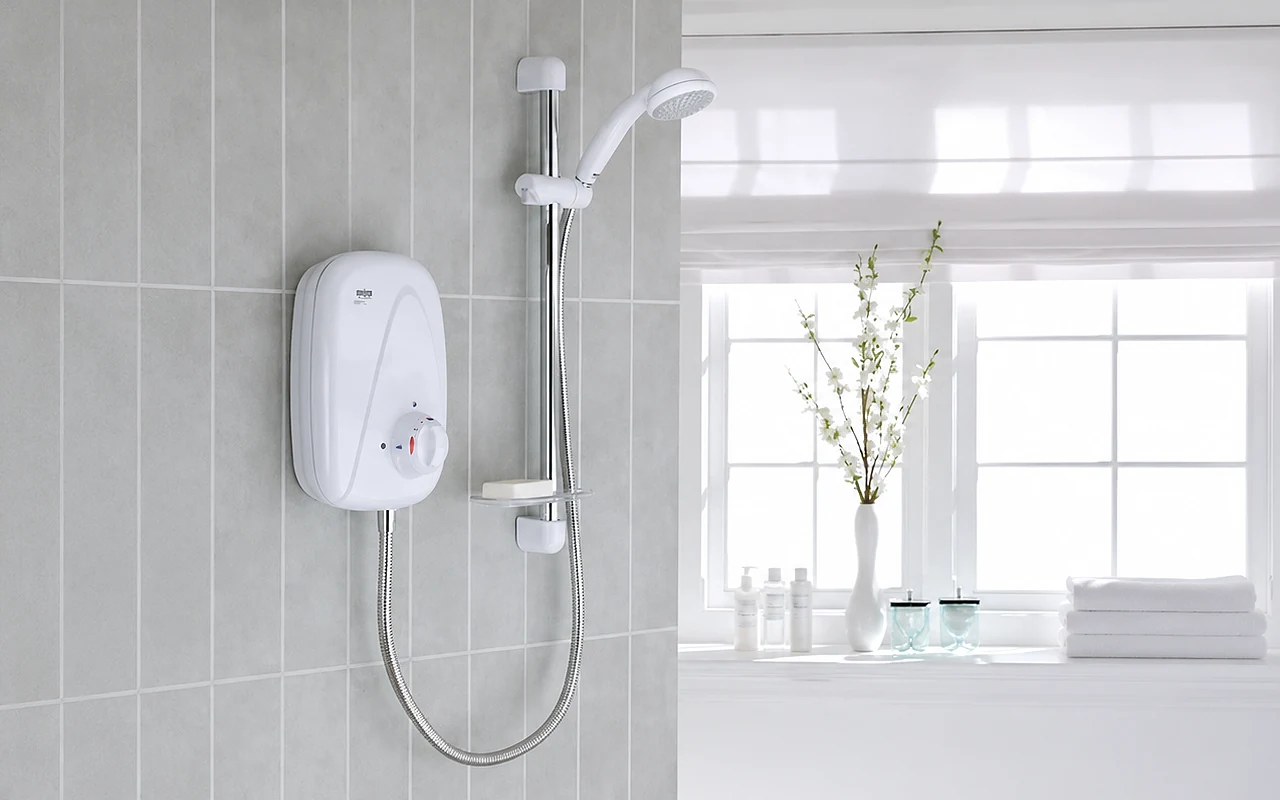
A trusted mid-range brand known for reliability and strong performance, the Mira Vigour suits basic needs, while the Event XS offers high output and thermostatic control.
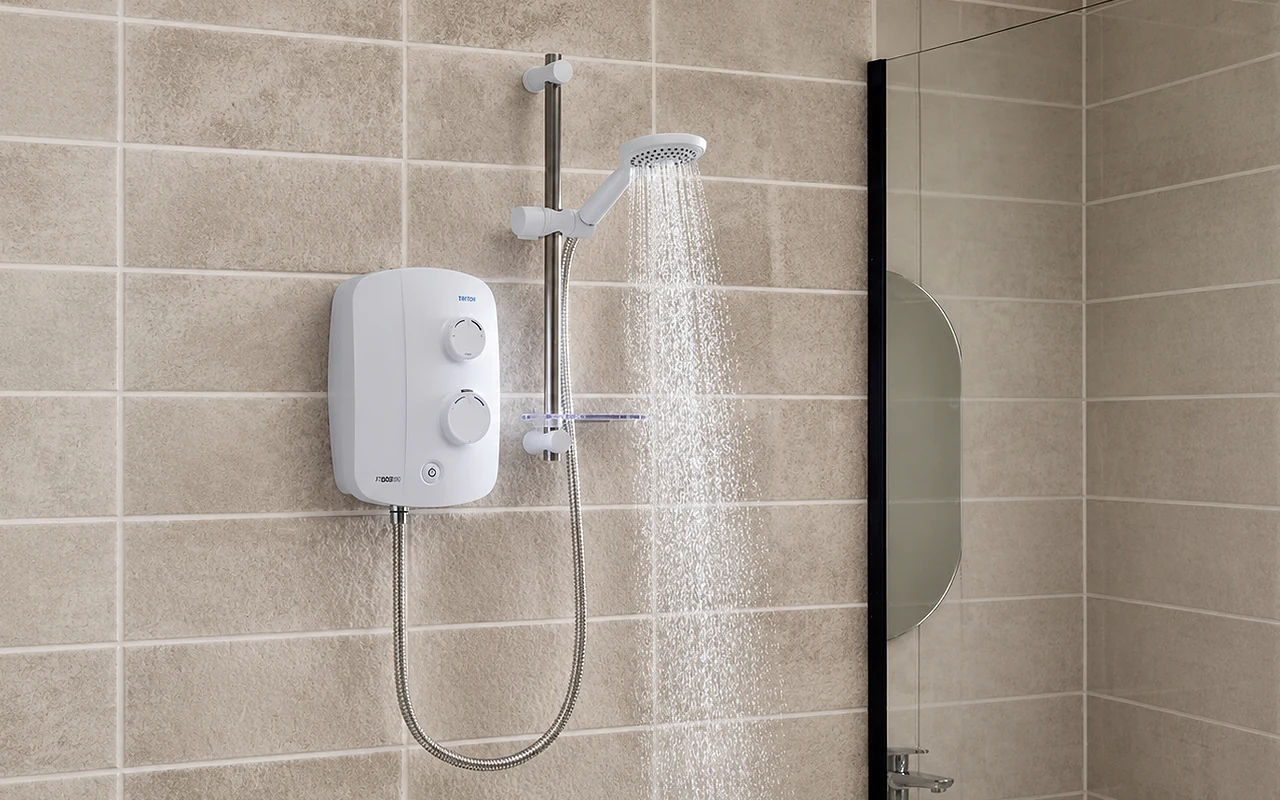
A solid budget-to-mid option, with the AS2000SR standing out for quiet operation, good performance, and excellent spare parts availability.
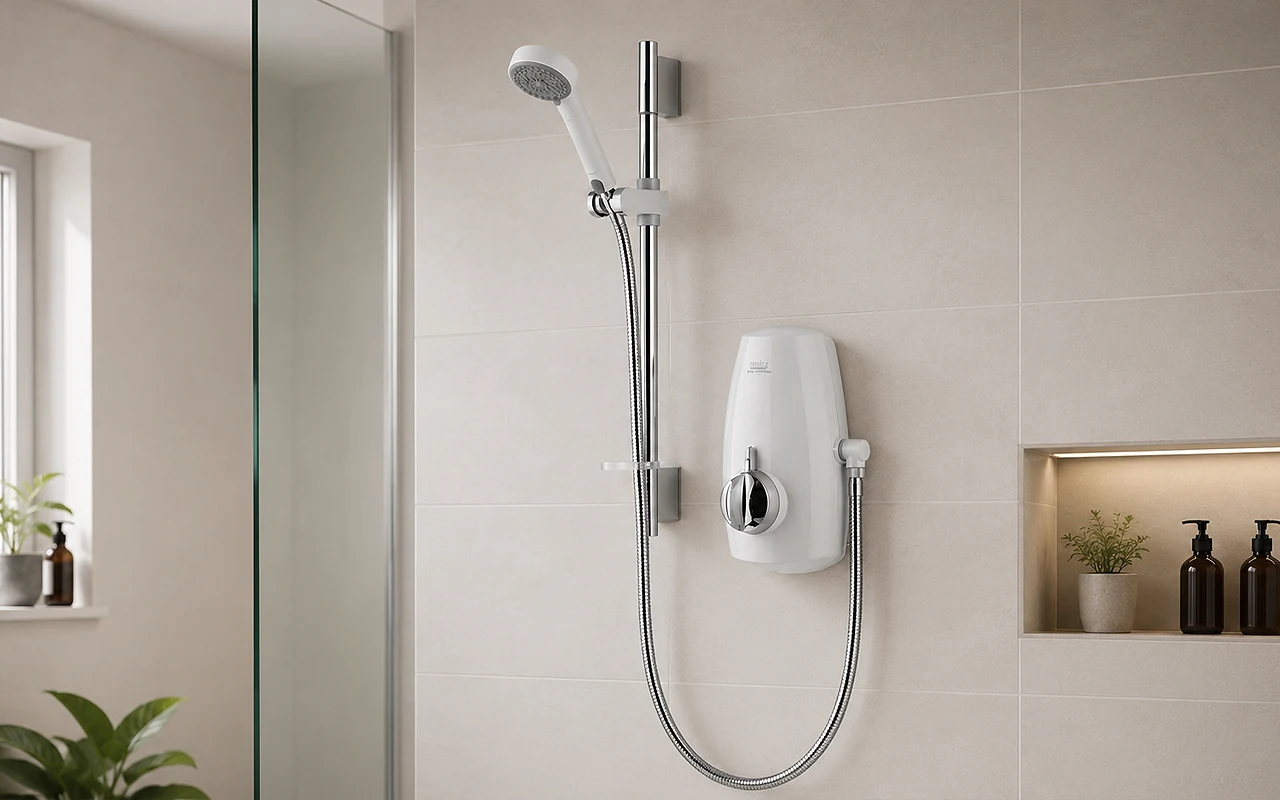
A premium choice, with the Aqualisa Aquastream Thermo delivering high flow rates, precise temperature control, and longer warranties for long-term use.
Ready To Find the Right Power Shower?
A power shower is one of the most effective upgrades available for a gravity-fed home, but only when it's matched to the right water system. The key decisions are straightforward: confirm you have a gravity-fed setup, check your head height, choose between manual and thermostatic control based on your household, and select a brand that fits your budget and long-term expectations.
Get those fundamentals right, and the reward is a genuinely powerful shower every morning, from a system that runs reliably for years with minimal maintenance.
If you're ready to browse models from Mira, Triton, and Aqualisa, with full specifications, compatibility details, and trade pricing, then explore the full power shower range at QS Supplies and find the model built for your home, your water system, and your budget.
Frequently Asked Questions
The FAQs below cover the most common points of confusion around power showers, from compatibility with different plumbing systems to running costs to what professional installation actually involves. If you're unsure whether a power shower is right for your home, start here.
- What is the difference between a power shower and an electric shower?
- Can I use a power shower with a combi boiler?
- How much water does a power shower use per minute?
- Is a power shower better than a mixer shower?
- Why are power showers so expensive?
- Can I install a power shower myself?