
 0
0 Clearance Sale
  Brands


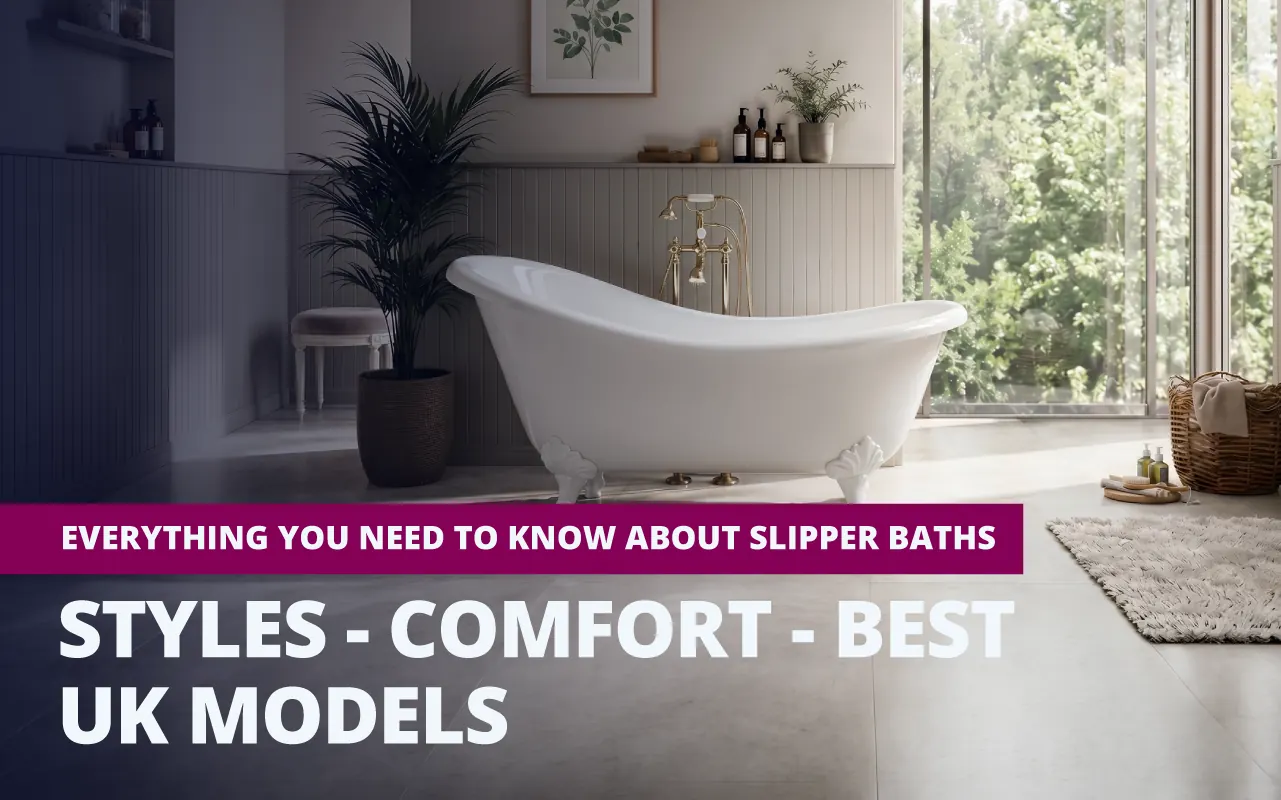
A slipper bath is a free-standing tub with one or both ends raised slightly above the rim, letting you recline comfortably with your shoulders and head well supported. The name comes from the raised end's resemblance to the toe of a slipper. It's an aesthetic design that was popular in the Victorian era and can give your bathroom a traditional twist.
In this article, we'll go over the differences between a single-ended or double-ended slipper bath, styles to choose from, standard sizes, and the top slipper bath products to check out.
Single-Ended vs. Double-Ended Slipper Baths
Here are the main differences between a single- and double-ended slipper bath.
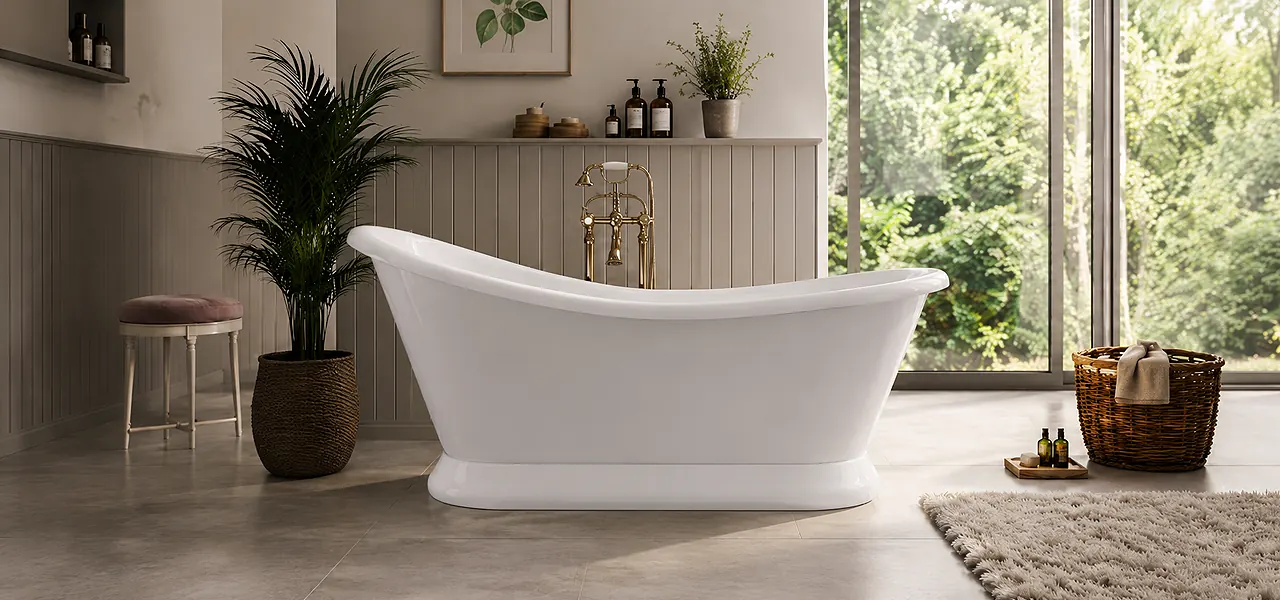
As the name implies, a single-ended slipper bath has only one end that is raised. It’s made for a solo bather, and the bath taps sit at the non-reclined end.
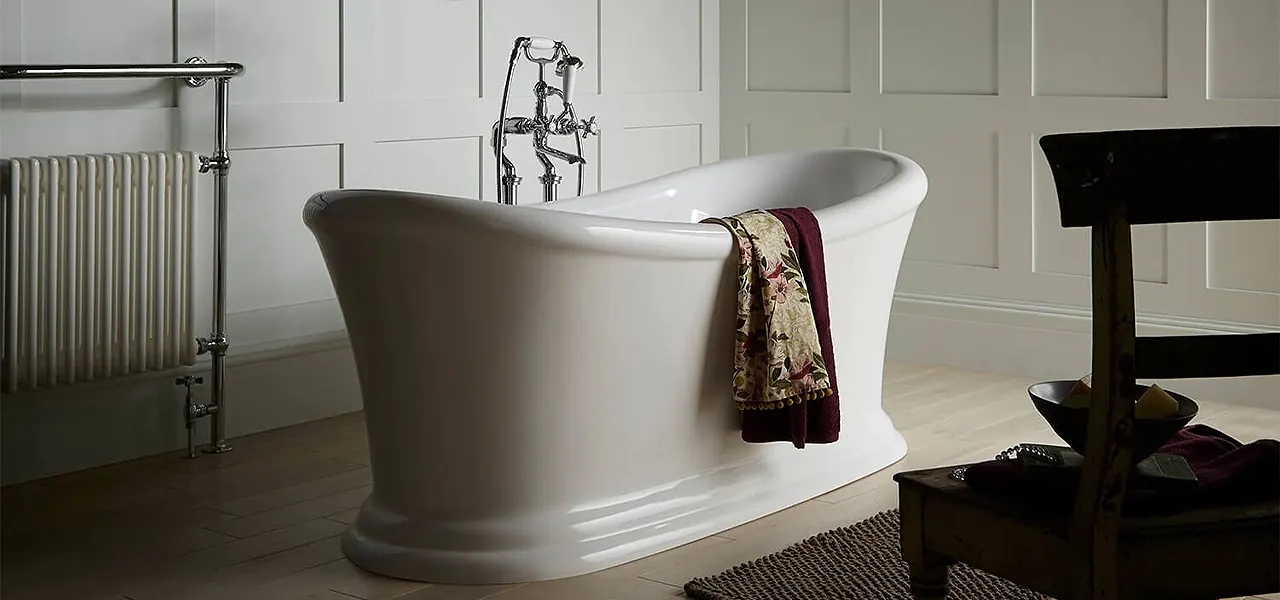
Unlike its single-ended counterpart, a double-ended slipper bath has both ends reclined. This design makes it perfect for two bathers. The taps are located in the middle of the bath to accommodate both people.
Slipper Bath vs. Standard Freestanding Bath
A freestanding bath means that all four sides of the bathtub are not attached to any walls. It sits independently in your bathroom suite. They can come in many different sizes and shapes, including those with rolled rims, traditional rectangles, and rounded shapes. A slipper bath is simply a type of freestanding bath without a uniform height all the way around.
Slipper Bath Styles & Materials
The type of slipper bath you choose varies based on your style preferences and the types of material used to create it. Here are the four main looks to be aware of.
Traditional Clawfoot Cast Iron A clawfoot tub rests on four feet. The design of the feet can vary (some have elaborate designs, others are more subdued, and they come in different finishes; think matt black, chrome, nickel, or brushed brass). This traditional bath is usually made of cast iron, which is very durable and feels luxurious.
Modern Acrylic Freestanding Today’s baths frequently come in acrylic material, as they are affordable, low maintenance, easy to set up, and look great, too. And since many are made from recyclable materials, they’re also environmentally friendly.
Stone Resin/Composite Crushed natural stones are bonded together to create a solid surface for this type of bath. They are typically made from marble or quartz and can have a matt or satin finish, depending on the style preference. These are quite durable with a long lifespan.
Roll-Top Slipper A roll-top slipper bath has the top rim curved or folded over to give a traditional look and feel. Rather than a specific material, it’s a design that can be added to an acrylic, stone, or cast iron tub for a vintage aesthetic.
Slipper Bath Sizing Guide
Below, we’ll go over the standard sizes of slipper baths. Keep in mind that your specific layout, bathroom furniture pieces, fixtures, and overall size will directly affect the length and width of the slipper bath you choose.
Standard UK Sizes
Standard UK sizes for slipper baths resemble typical sizes of a traditional bath.
For a compact version, 1,500 mm is a good starting point. A common length is 1,600 mm, with the longest length being around 1,700 mm for larger bathroom suites (or taller people). The height/depth of the tub tends to be up to 800 mm, and the width is between 450 and 800 mm.
Compact Slipper Baths for Small Bathrooms
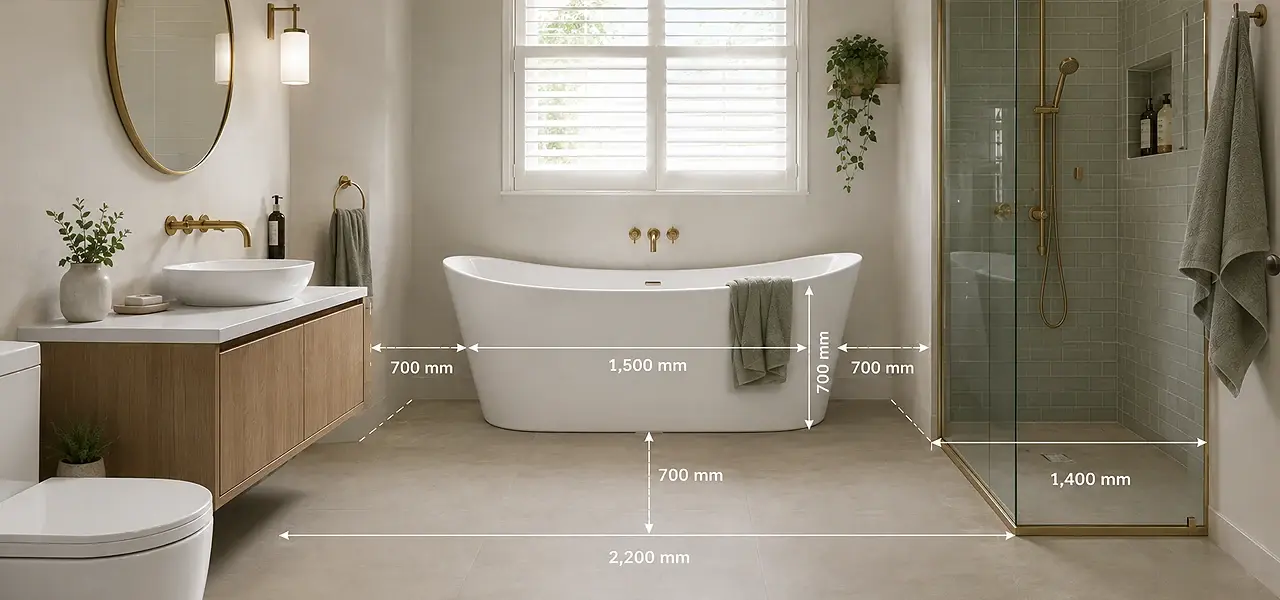
Recommended bathroom guidelines say there should be at least 700 mm of clear space between a freestanding bath and other fixtures (like the vanity and toilet) to allow comfortable movement. A compact slipper bath typically measures 1,500 mm long by 700 mm wide.
So, if we were to calculate what the space around the slipper bath should look like, it would have a total length of 2,200 mm by 1,400 mm. You can add in the other bathroom sanitaryware around this section for optimal space. Of course, a very small space would require less clearance around the bath.
Floor Weight & Loading Considerations
Before we get into load considerations, it's helpful to understand what a suspended floor means. Many older UK homes have more than one storey, and the floors in the upstairs area are supported by timber joists rather than flat, concrete, solid ground. These are "suspended" floors. Therefore, the heavier a freestanding slipper bath is, the riskier it is to put into one of those floors as opposed to the ground floor. Keep this in mind when you're deciding the material to go with.
For example, a standard 1,500mm cast iron slipper bath weighs about 90 to 145 kg alone. Acrylic tubs tend to be much lighter, closer to 32 to 45 kg. The heaviest? Stone baths, which can vary between 350 and 800 kg. These numbers also don't take into account the weight of the water once they're filled, which can add another 300 kg of water if a standard bath holds about 300 litres of water.
All in all, it’s best to invest in a structural engineer if you’re looking at the heavier options.
Can You Fit a Shower Over a Slipper Bath?
Technically, yes, but it's not a great idea. The raised reclining end makes it pretty difficult to fit a rigid shower screen, since the curved design doesn't give a flat surface to install it. A curtain is an option, but the uneven rim means it won't hang or seal well, so you risk having water splash onto the floor.
Shower Solutions
If you really want a shower in the slipper bath, the most suitable option is a bath-shower mixer with a handheld. This means you’ll have a single set of taps from the floor beside the bath connected to the bath spout and a handheld showerhead for a quick rinse-off. It won’t give you a proper shower experience, though.
The best options are to create a separate bath and walk-in shower enclosure or stick with a dedicated shower bath (like a P-shaped, L-shaped, or straight bath option ) with an attached showerhead.
Taps and Wastes
Slipper baths also need taps and waste solutions. Here are the main ones to choose from.
Freestanding Floor-Mounted Taps
As mentioned briefly, freestanding baths can have pipes that run from underneath the floor and come up through the floorboard beside the bath. Most slipper baths with this tap design have a plate to cover where the pipes are for a cleaner look.
Wall-Mounted Taps
As the name implies, these wall-hung taps come out directly from the wall, wherever the existing pipework is. If the bath sits further away from a wall, the longer spout may look a bit awkward, so this setup works best for freestanding tubs somewhat close to a wall.
Deck-Mounted Taps (Roll-Top Baths)
Some roll-top baths do have predrilled tap holes where you can directly install taps. The pipework still runs underneath the bath, through the flooring, but the tub itself covers the piping for a much neater look.
Bath Waste
All baths need somewhere for the waste to go. In a single-ended slipper bath, you’ll typically have the plug hole at one end of the bath (the end opposite of the raised section). In a double-ended slipper bath, the plug hole is usually placed in the middle of the bath floor so the water drains from the lowest point. Here are bath waste accessory options to consider.
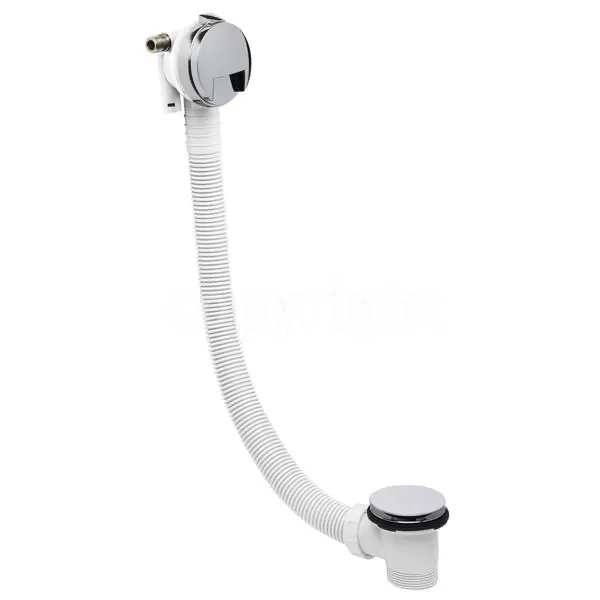
Opens and closes by pushing down on the plug. To close, push down and push again to open it.
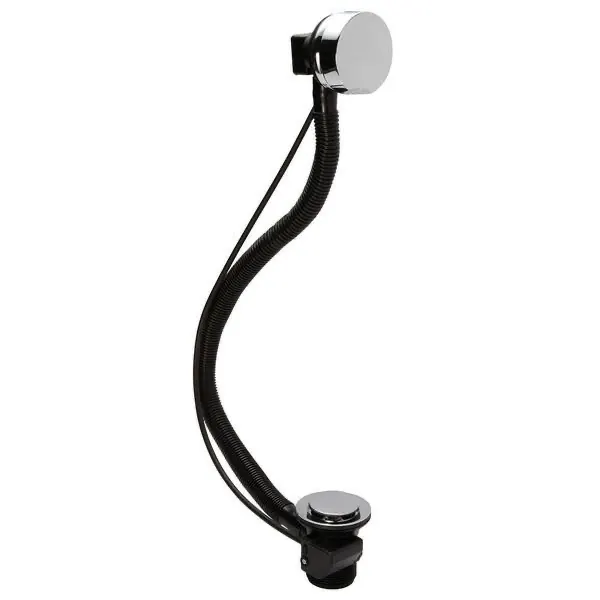
Rather than touching the plug to open or close it, there is a lever or button to control it.
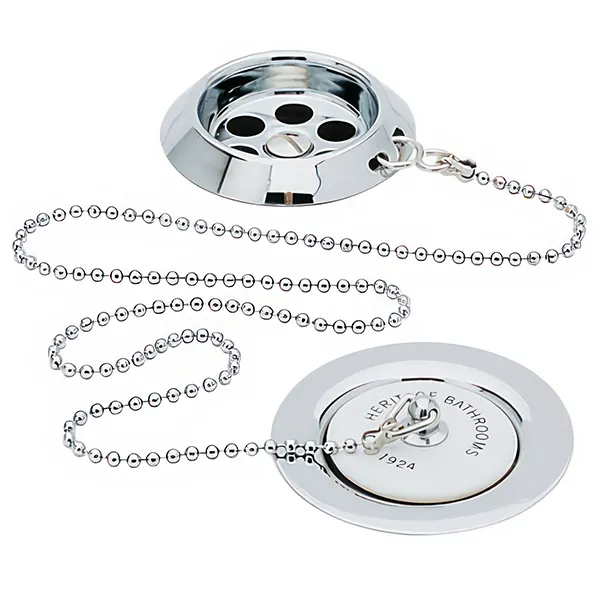
A traditional waste type; it’s a rubber-metal plug attached to a change. Drop the plug in to fill the bath and remove it to drain the water.
Best Slipper Baths at QS Supplies
Check out these curated picks at QS Supplies to help you choose your slipper bath.
Best Traditional Slipper Baths
For traditional bathroom options, the top choices are a roll-top slipper bath and a cast iron double-ended slipper bath with feet.
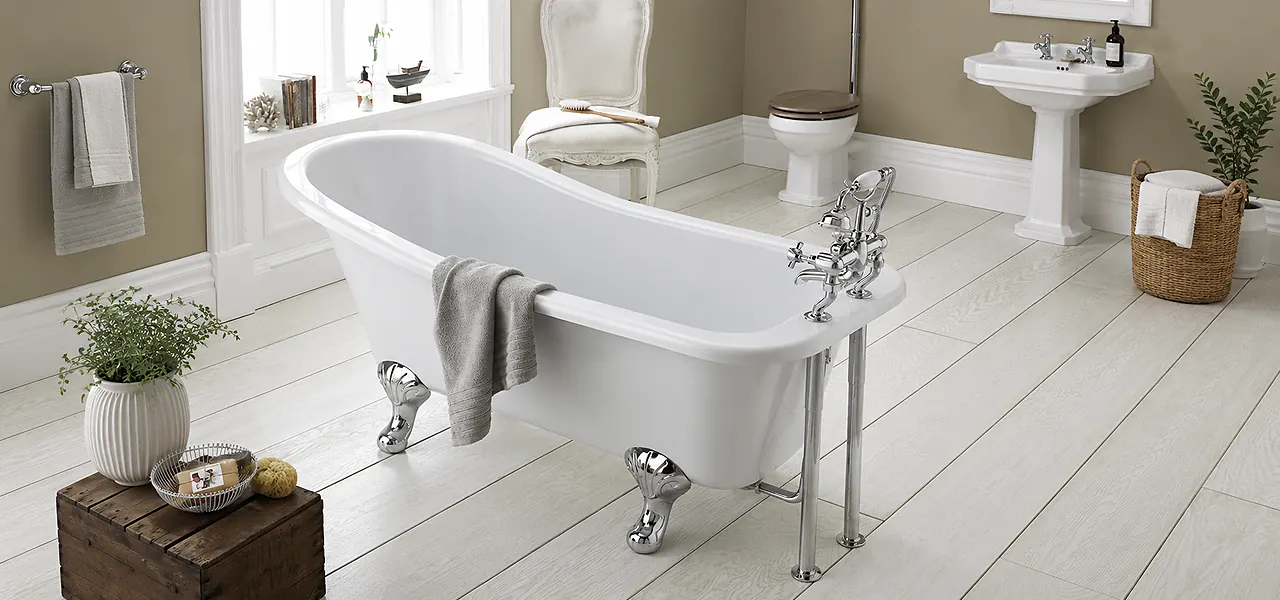
This single-ended slipper bath, complete with a roll-top, comes with multiple leg options. It’s a lightweight choice due to its acrylic material and comes in multiple lengths to fit any bathroom size.
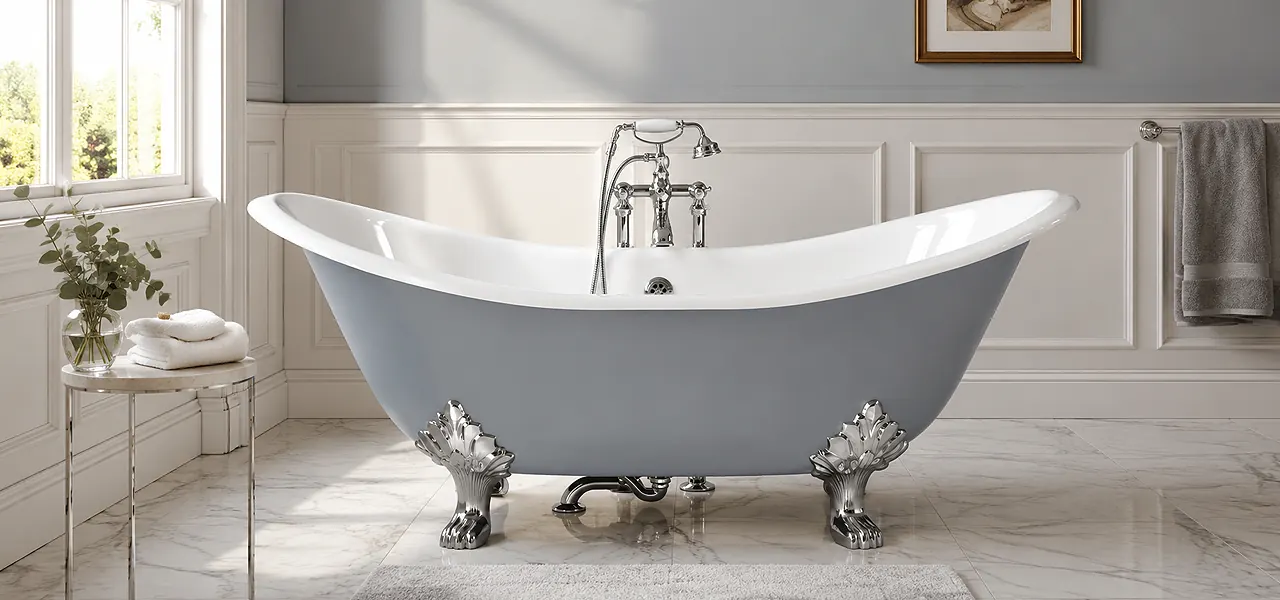
Heritage Devon Cast Iron Bath With Feet
A classic look with Victorian-style feet. You can choose between no tapholes or a two-tap-hole version depending on your style preferences. The dimensions are 1,800 x 770 mm, suitable for a mid-sized or larger bathroom.
Best Modern Slipper Baths
Looking for contemporary options? Here are the top picks.
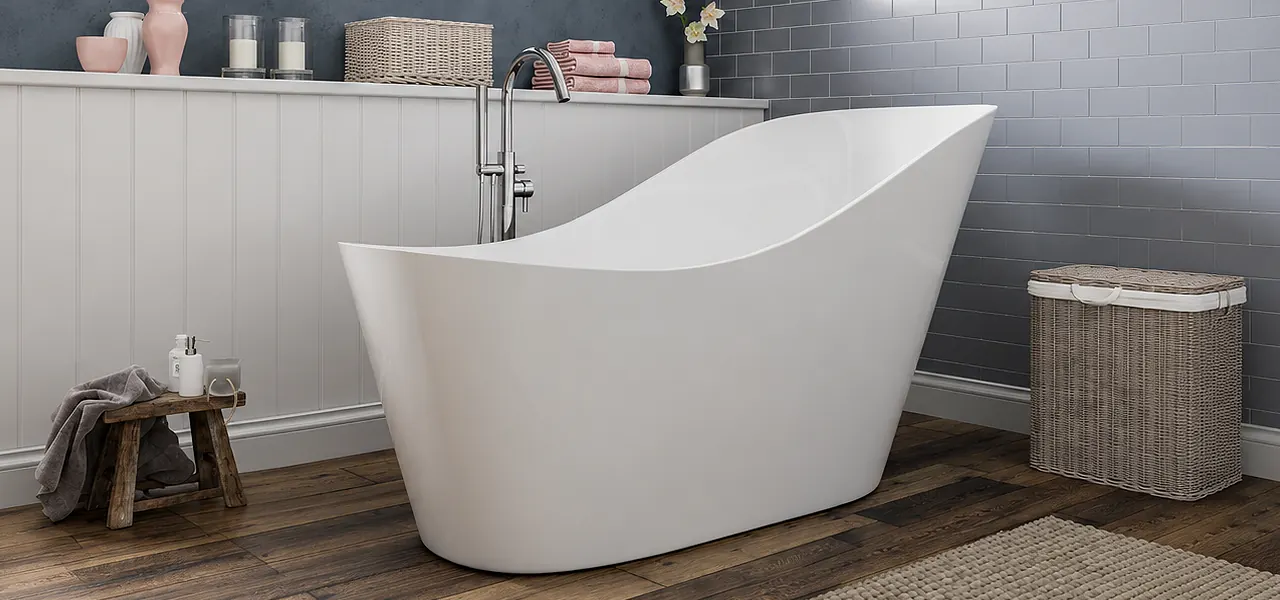
Trojan Winton Floor-Standing Twin Skin Slipper Bath
Modern bathroom styles call for a sleek, clean look. Go no-feet with this contemporary-designed slipper bath.
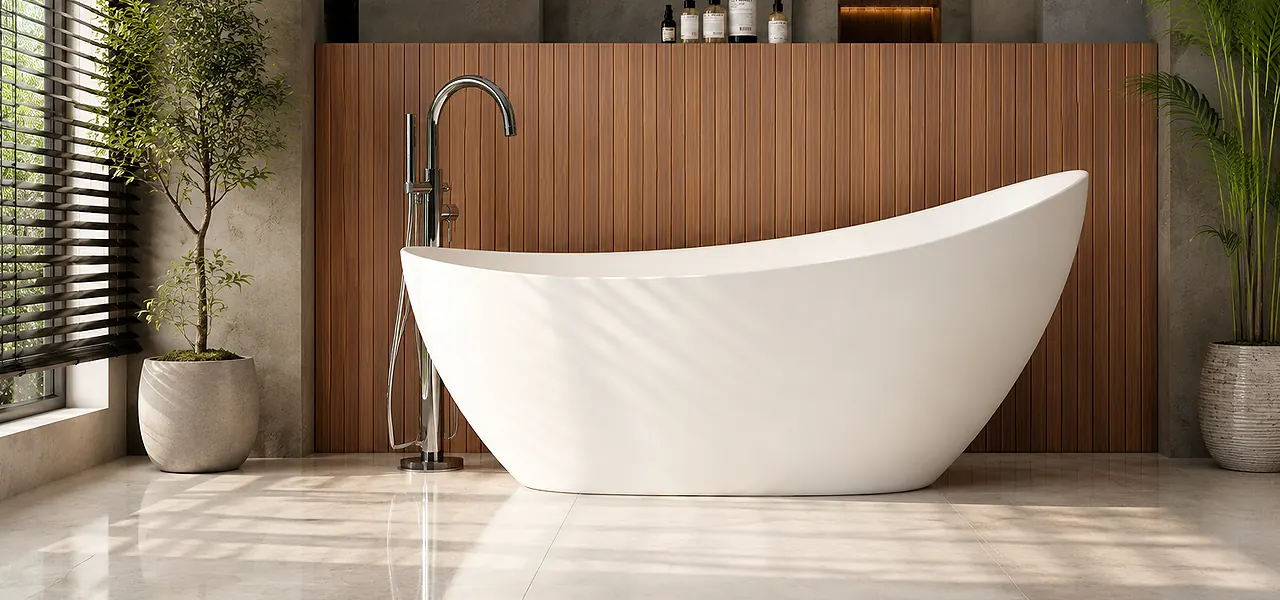
Imex Arco Slipper Freestanding Bath
Looks and feels luxurious. This slipper bath also comes in matt black, which acts as a focal point in a modern-styled bathroom suite.
Best Small Slipper Baths
Small baths fit in compact spaces. Below are the top choices at smaller dimensions.
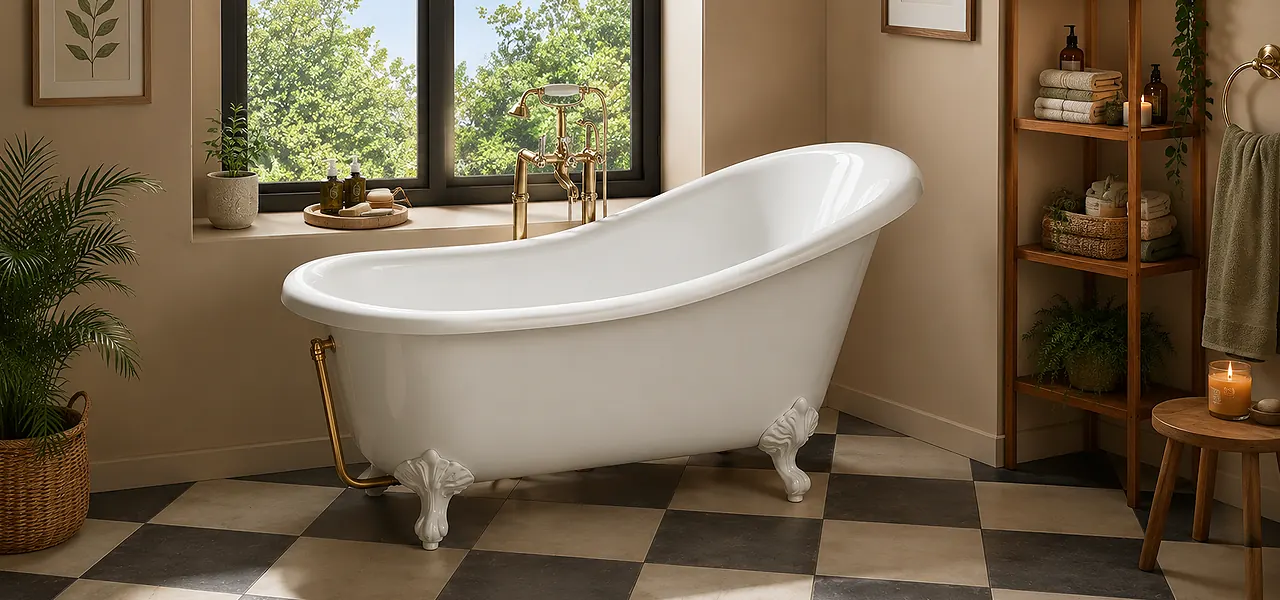
Tavistock Vitoria White Single Ended Slipper Bath
A more affordable option, this slipper bath is on the smaller side at 1,550 x 720 mm. It comes with three feet colour options and is ideal for compact suites.
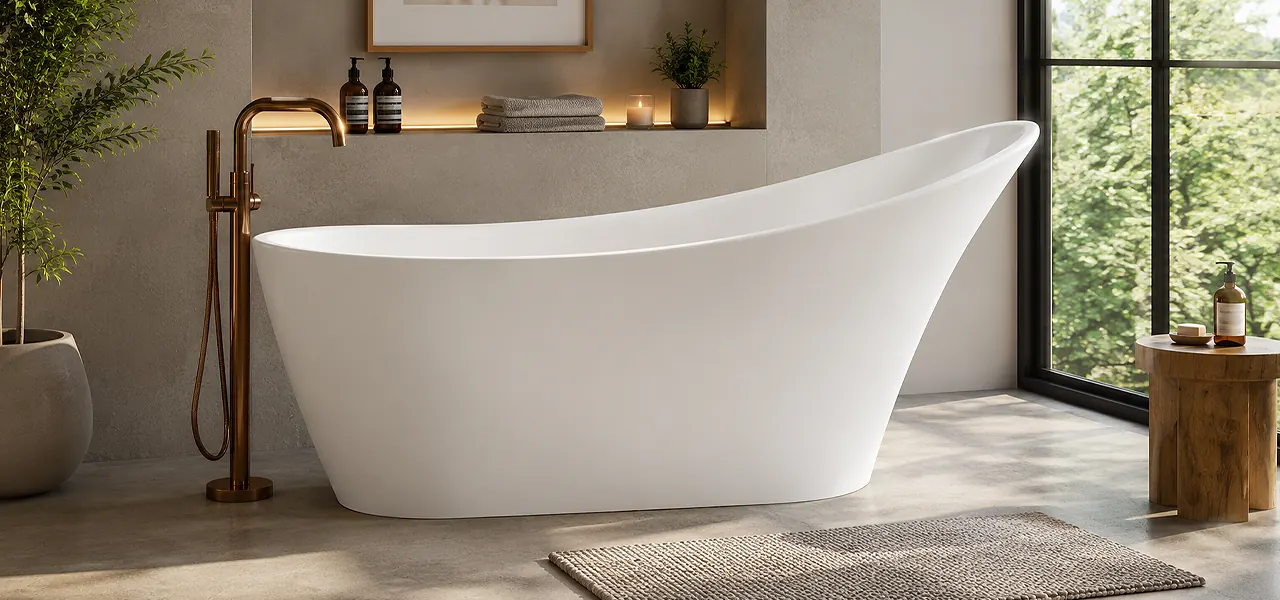
Heritage Lydford Freestanding Acrylic Slipper Bath
At 1,660 x 720 mm, this bath option fits most mid-sized bathrooms. It sits flush with the floor for a modern look and also includes the chrome clicker waste and overflow for added convenience.
How To Install a Slipper Bath
Like most projects, start by measuring your bathroom layout and choose your slipper bath size. Then, look at the materials. Are you installing it on the ground floor? Cast iron could be great here. Suspended flooring? Acrylic works best.
Once you’ve chosen the type of bath you want, you’ll have to prep the bathroom floor by levelling the surface and planning for access to the plumbing if you ever need to do maintenance or fix a leak. Once the plumbing is complete, position the tub and install the taps. Don’t forget to seal around the base and drain area to prevent water damage.
If you’re not comfortable with the pipework needed to install the tub or are unsure about the weight loading, hire a fitter for peace of mind.
Is a Slipper Bath Right for You?
If you’re looking for a unique and comfortable bath experience and are intrigued by the luxurious look of a freestanding tub, then a slipper bath is a brilliant choice for your bathroom suite. Some of the key buyer decisions to consider include:
- Whether you want a single-ended or double-ended slipper bath
- The type of style you like most (traditional or modern)
- The materials used (acrylic, cast iron, or stone)
- Sizing dimensions based on the layout of your bathroom
If you’d like to explore the full range of slipper baths, check out QS Supplies for the most popular options in your budget.
Slipper Bath FAQs
Here are the answers to the most common questions about slipper baths, including its definition, the origin of the name, and other characteristics to know.
- What is a slipper bath?
- Why is it called a slipper bath?
- What's the difference between a slipper bath and a freestanding bath?
- Are slipper baths comfortable?
- What is a double-ended slipper bath?