
 0
0 Clearance Sale
  Brands


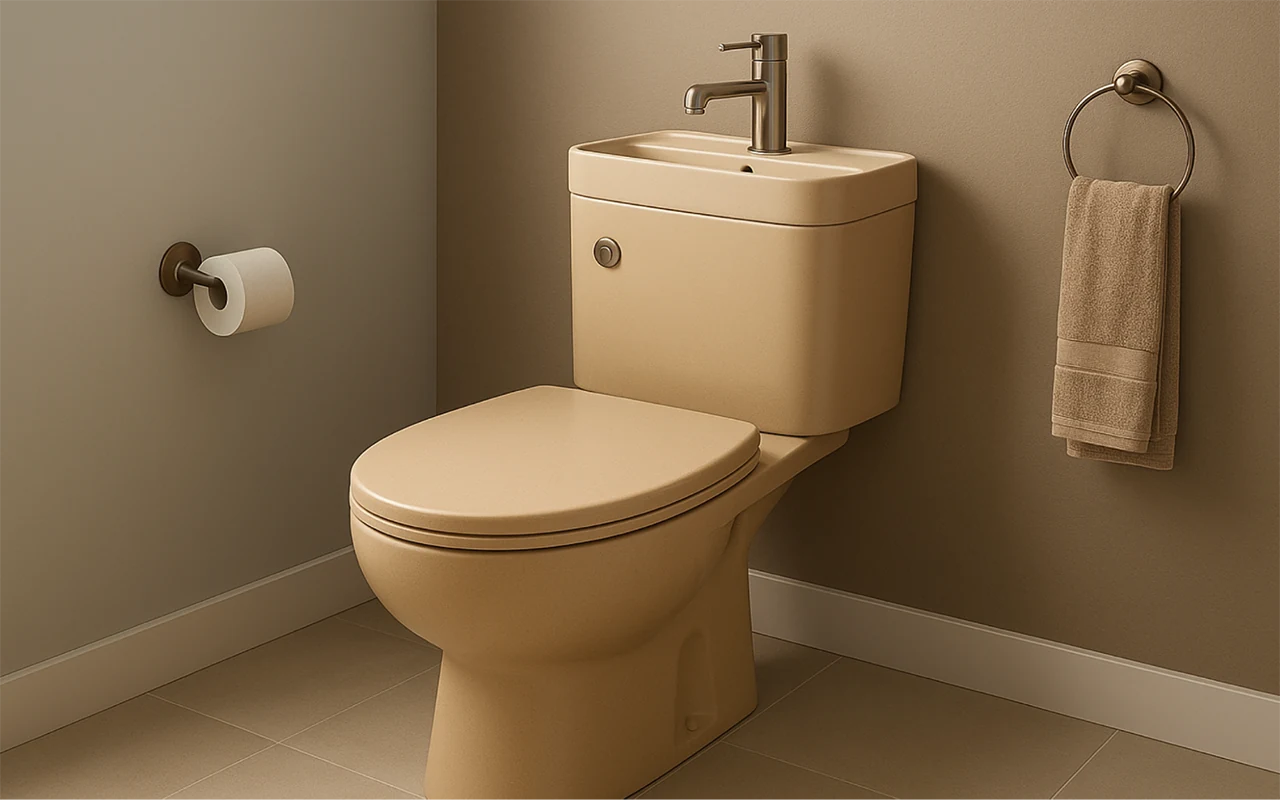
A toilet with sink on top is exactly what it sounds like. Instead of having a separate basin and WC, the small basin sits above the cistern so you can wash your hands and then reuse that greywater to flush. It's an all-in-one sink combo that feels like a clever little upgrade rather than a compromise.
Because the combination unit takes up about the same footprint as a modern toilet, it's a genuinely space-saving option for a tiny cloakroom, compact ensuite, or any small bathroom where every centimetre counts. You still get a standard toilet experience, only with an in-built basin on top.
Throughout this guide, we'll look at how these units work, where they fit best, and what to consider when you compare them with a separate toilet and bathroom furniture or vanity units. We'll also cover installation basics, UK regulations, and the high-quality product options available.
How Does a Toilet‑Sink Combo Work?
A toilet with sink on top works by turning the little basin into a mini water recycling system. The in-built sink or wash basin is attached directly above the cistern, so when you wash your hands, the used water flows through the tap hole and down a small connector into the tank below.
Greywater is then stored until you flush, when it flows from the cistern into the toilet pan as usual. In many designs, the toilet also has a dual flush button, so you can control how much water you use each time.
Because the basin and toilet are combined in an all-in-one unit, you usually need fewer extra pipes than you would for separate basins or countertop basins. The basic functionality is the same as a standard toilet and sink, just packed into a much smaller footprint.
Pros and Cons of Toilet‑Sink Combo Units
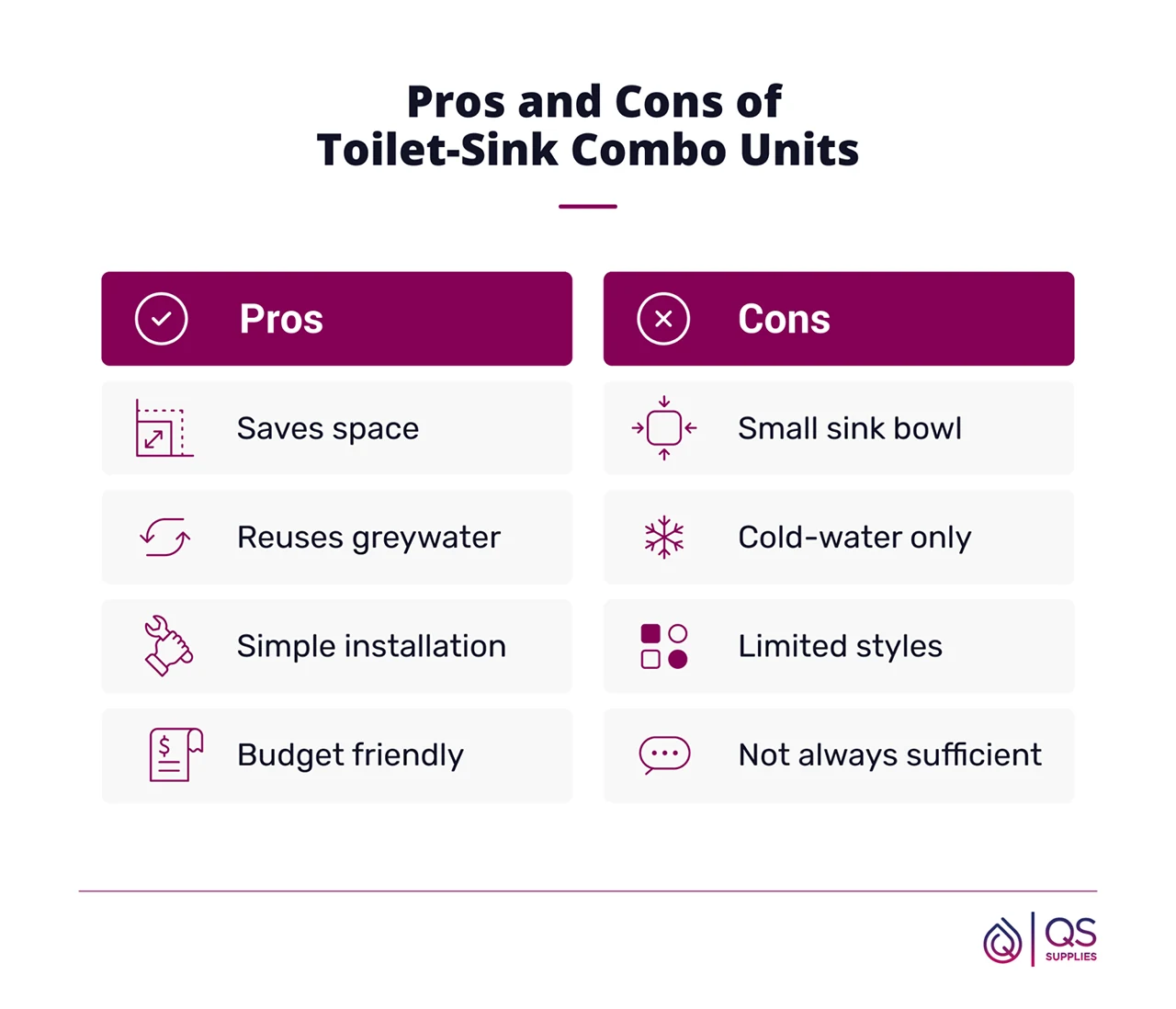
There are some clear upsides to choosing a toilet-sink combo, especially if you're planning a small bathroom or guest space. Here are the main benefits to consider:
-
Space saving in tight rooms. A compact all-in-one combination unit can free up valuable floor area in a tiny cloakroom or ensuite, because you're not trying to squeeze in a separate basin and pedestal.
-
Water efficiency from greywater reuse. The basin water is reused for flushing, which can cut overall consumption compared to using a separate toilet and sink. It aligns with water efficiency advice that encourages small, everyday changes.
-
Minimal plumbing alterations. Many units sit where a standard toilet would go, so you often only need minor changes to pipework rather than a full reroute for an extra basin.
-
Good value versus full bathroom suites. A toilet-sink combo can be more affordable than buying separate pieces from full bathroom suites, which is helpful if you are upgrading on a tight budget.
Even with all their advantages, toilet-sink combos aren't perfect for every bathroom. It is worth weighing a few drawbacks before you commit.
-
Smaller basin area. The bowl on top is usually shallower than full pedestal basins, so it can feel tight if you are used to a larger sink.
-
Cold-water-only taps. Many units only offer cold water at the basin, which may feel less comfortable in winter than a separate modern toilet and basin setup with mixed supply.
-
Fewer style options. You'll find less variety compared with pairing a traditional toilet or modern toilet with separate furniture, including designs that feature a rimless toilet.
A separate vanity is still needed sometimes. In a busy family bathroom, you might still want a full vanity unit, a larger toilet pan, storage, a big mirror, and a matching soft-close seat for everyday comfort.
How To Install a Toilet‑Sink Combo
Installing a toilet with sink on top is not that different from fitting a standard close-coupled toilet, especially if you are already comfortable with basic plumbing. The main change is that the basin on top needs a little extra care so the water drains correctly into the cistern.
Many confident DIYers can handle the job, although in a very tight cloakroom or wet room, it's usually safer to bring in a professional installer. It's also worth checking the current UK guidance from Water Regs UK before you start any plumbing work. If you're unsure about compatibility or layout, QS customer support can talk you through which toilet unit or sink unit will suit your space.
Here's a simple overview of the main steps. Always follow the manufacturer's instructions for your specific model.
-
Shut off the water and remove the old toilet. Turn off the supply, flush to empty the cistern, then disconnect the toilet seat, fixings, and existing toilet unit.
-
Prepare the installation space. Check the floor is sound, confirm the waste outlet position, and make sure the new unit meets comfort height guidelines with enough clearance around it and any nearby wall-hung basins or furniture.
-
Position the new toilet-sink combo and connect the waste. Set the pan in place, align it with the soil pipe, and fit any connector pieces supplied with the unit so the waste connection is secure.
-
Fit the cistern, frame, and fixings. If your model uses concealed cisterns or a wall-mounted frame, box these in as directed and tighten all fixings.
-
Install the tap and drainage for the basin. Fit the tap into the tap hole, connect the basin waste, and check under the basin for any drips while the tap runs.
-
Reconnect the water and test the system. Turn the supply back on, set the dual flush mechanism, then test both flush buttons and make sure the greywater from the basin drains smoothly into the sink unit and refills the cistern without leaks.
UK Regulations for Toilet‑Sink Combo Units
If you're installing a toilet-sink combo in the UK, you need to make sure the work follows current UK bathroom building regulations on water, sanitation and safety. Part G of the Building Regulations covers cold and hot water supply, water efficiency and sanitary conveniences, including toilets and basins.
Here are some of the key points to keep in mind in a small bathroom or wet room:
-
Clearances and layout. You should allow comfortable space to move around a back-to-wall toilet, wall-hung toilets, and wall-hung basins, as well as the door. Think about how people will walk in, turn, and sit, and make sure nothing feels cramped or awkward.
-
Ventilation and moisture control. Bathrooms need adequate ventilation to control steam and condensation, especially if you're combining a toilet-sink unit with shower enclosures, a quadrant shower, or open shower trays. An effective extractor fan or a window you can open is usually required to keep the room dry and mould-free.
-
Plumbing and water efficiency. Regulations set limits on daily water use, so new toilets and basins are expected to be efficient. Part G of the Building Regulations encourages features like basin mixer taps, dual-flush cisterns, and water-saving shower heads so homes can meet overall targets for consumption.
-
Heating and obstructions. Radiators, towel rails, and any freestanding storage should not block access to the toilet, basi,n or shower. Check there is a clear route in and out and no sharp corners where someone might bump into hot metal or pipework.
-
Wet room drainage and waterproofing. In a wet room, the floor usually needs a gentle gradient, often around 1.25–2%, so water runs towards the drain instead of pooling near the toilet or basin. The floor and lower walls should be fully tanked or waterproofed before you add tiles or wall panels.
Where To Buy a Toilet With Sink on Top
Choosing the right WC unit or combination unit is easier when you can compare a few specific models side by side. If you like the idea of a toilet with sink on top that still looks like a modern toilet, QS stocks several high-quality options that sit neatly with your existing bathroom furniture and vanity units.
Featured toilet-sink combo units at QS:
-
The compact 2-in-1 back-to-wall toilet with basin and mixer tap works well in small rooms where you need a single unit that saves floor space.
-
The Mayford 2-in-1 toilet unit with basin offers a slightly wider top, which gives you a bit more room around the basin and a clean, simple profile.
-
The Combi 2 in 1 toilet with soft-close seat and basin combines a gentle-closing toilet seat with an integrated basin for a practical everyday setup.
-
The Harmony basin and toilet set for small cloakrooms is designed as a matching pair, which helps if you want a coordinated look in a tight space.
-
If you would rather buy everything together, you can browse compact cloakroom suites that pair toilets with matching basins and choose a style that suits either a traditional toilet feel or a more modern toilet design.
Other fixtures people often upgrade at the same time:
When you plan a new combo unit, it's common to look at related pieces such as bidets, shower heads, shower trays, a quadrant shower, full shower enclosures, wall panels, radiators, and towel rails. Many customers also take the chance to refresh a kitchen sink and kitchen taps, or switch to accessories with chrome finishes, so the whole home feels more consistent.
QS offers free delivery and next-day delivery on selected ranges, which can help you line up your project with a sale period like Black Friday and make sure your new unit arrives in time.
Why Choose QS Supplies for Your Toilet‑Sink Combo
A toilet with sink on top makes the most sense in a small cloakroom or compact second bathroom where every bit of floor area matters. You get a space-saving layout without losing everyday comfort, especially if you match the unit with the right bathroom furniture and storage.
QS Supplies gives you a wide choice of high-quality combo units, with clear details on dimensions, comfort height options, and features like a soft-close seat, plus reliable delivery and strong warranty support. If you're ready to compare styles and prices, you can explore our full range of compact bathroom solutions and find a unit that fits your home.
FAQs
People often ask similar questions when they first see a toilet with sink on top, and these quick answers focus on space-saving layouts, comfort, and what to expect before you buy.
- Are toilets with sinks on top any good?
- How does a toilet with a sink on top work?
- What are the disadvantages of a close-coupled toilet?
- What is a toilet with a sink called?