
 0
0 Clearance Sale
  Brands


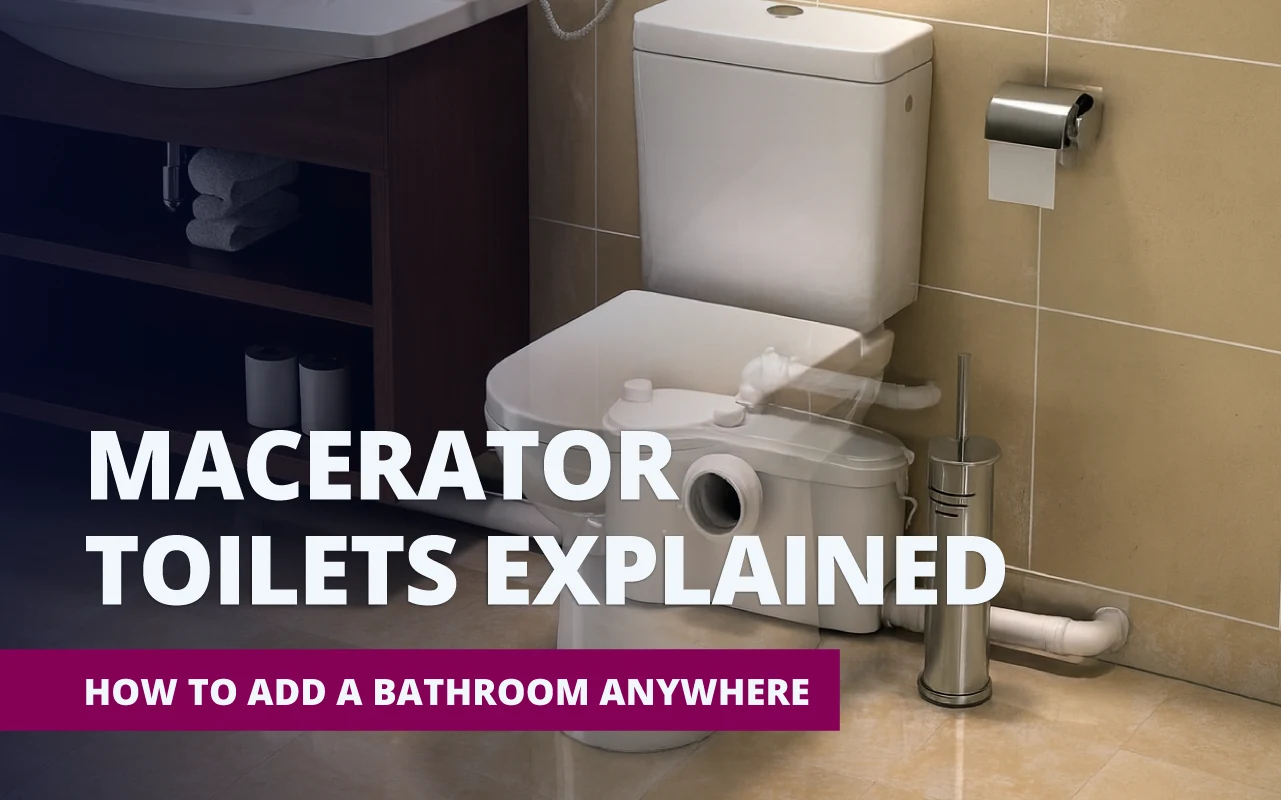
A macerator toilet is a clever way to add a loo where normal plumbing would struggle. Instead of needing a full gravity-fed waste pipe run, a toilet macerator allows you to fit a toilet in basements, lofts, garden rooms, an ensuite, or even a tight cloakroom.
Inside the compact macerator unit, a small grinder chops waste into a fine slurry. A built-in macerator pump then pushes that slurry through narrow pipes as part of a powered pump system, providing far more flexibility in where the pipework can be placed.
That means you can often add a new toilet with minimal renovation, rather than ripping up floors or reshaping the whole layout. For some homes, it's an achievable DIY project, while others may require professional assistance.
If macerator toilets don't sound right for you, there are lighter domestic options and heavy-duty models for busier households or trickier spaces. In the following sections, we will look at how macerators work in more detail, how they compare with regular toilets, what to expect from installation, maintenance, and lifespan, and how to pick the right unit.
How a Macerator Toilet Works
Understanding how a macerator handles wastewater makes it much easier to choose the right setup. In most homes, the system starts with a standard toilet or a wall-hung toilet that connects to a compact macerator box behind or beside the pan.
When you flush, the waste flows into that chamber instead of straight into a large soil pipe. Inside the unit, fast-spinning blades turn everything into a smooth slurry. A macerator pump then works with a water pump to push the waste through small-bore pipework and on towards the main stack.
Because the pipes are narrow and pressurised, the system can often move waste horizontally over several metres or lift it to a higher outlet, which creates far more flexibility in tight or awkward spaces. Many models can also take grey water from shower trays, basins, or a washing machine, so that you can build a complete small bathroom off the same run.
Noise levels vary between units, and heavy-duty options are usually a little louder due to stronger motors. If you want a compact WC and basin setup in one unit, the Saniaccess 2 macerator pump is a useful example of how these systems are put together.
Macerator Toilet vs. Regular Toilet
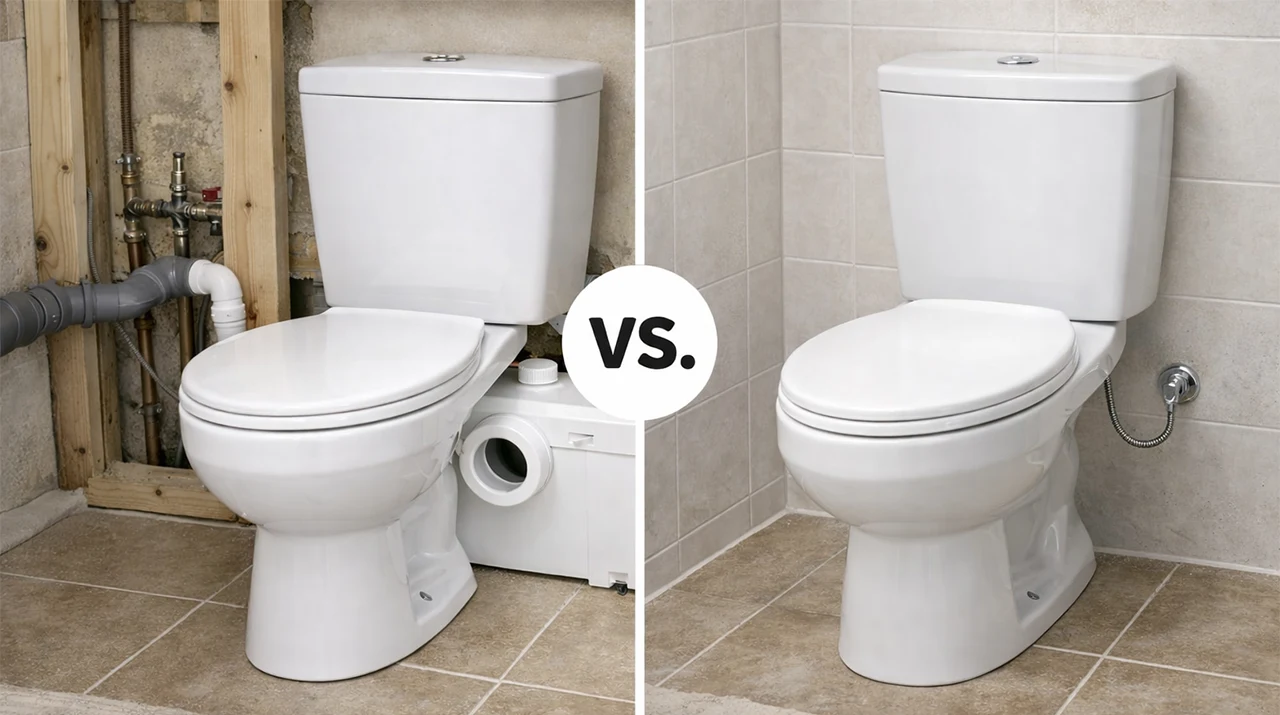
When choosing between a macerator toilet and a standard toilet, it's helpful to understand how each one removes waste from the bowl. A regular flush toilet relies on gravity. Waste drops through a large waste pipe that connects directly into the existing drainage system, so the toilet usually has to sit close to that soil stack.
A macerator setup works differently. The unit uses a powered pump system to push waste through smaller pipes horizontally or upwards, which means the toilet can sit much further away from the main stack and doesn't need a traditional waste pipe in the same way.
A traditional toilet is often the simplest choice when you're swapping an old pan in the same position. A compact option, like the Saniflo Sanicompact back-to-wall toilet, makes more sense when you want to add a new toilet in a tight or awkward space.
Here's a quick comparison of how the two approaches differ.
Macerator Toilet |
Regular Toilet |
|
Drainage method |
Powered macerator and pump |
Gravity-fed flush toilet |
Pipe sizes |
Small-bore discharge pipes |
Large-diameter waste pipe |
Ideal locations |
Basements, lofts, cloakrooms, garden rooms |
Rooms close to the main drainage system |
Renovation required |
Often minimal, uses existing structure |
May need new soil stacks or major alterations |
Maintenance |
Needs careful use and occasional servicing |
Usually low, similar to any standard toilet |
Noise |
Audible motor and chopping action |
Quiet, only the sound of water flowing |
Popular Macerator Models (QS Supplies Recommendations)
Choosing the best macerator model really depends on where you want the new bathroom and how hard it'll need to work. A compact cloakroom or guest ensuite often needs a slim unit that fits behind the pan, while a busy family home or small workplace may call for a more heavy-duty option.
QS Supplies stocks a wide range of Saniflo systems, so you can match the specifications to your layout instead of working around the pipework. Here's a quick look at some popular Saniflo macerators and what they're designed to handle:
Model |
Ideal use |
Compatible fixtures |
Key features |
Small offices or busy family bathrooms |
WC plus basin, shower, and some appliances |
Heavy-duty motor, handles occasional sanitary items, active carbon filter, two-year guarantee |
|
Slim cloakrooms and loft or basement spaces |
WC, washbasin, shower, and bidet |
Slim profile, small-bore discharge, automatic activation, domestic use |
|
Extra WC near existing services |
WC |
Two-chamber design, non-corroding materials, suitable for light commercial use |
|
Compact shower room or small full bathroom |
Single WC, washbasin, shower, and bidet |
Two-chamber pump, BBA certified, easy access for servicing, two-year guarantee |
Beyond these, ranges like Saniplus, Sanipack Pro, Ssanishower, Sanivite, Sanipro, Sanislim, and Sanitop cover everything from concealed units behind wall panelling to grey-water solutions under a kitchen sink.
When You Should Consider a Macerator Toilet
A macerator really shines when standard plumbing holds your plans back. It lets you work with an existing layout instead of rebuilding everything around the soil stack and existing pipework.
Basements. Great when the main stack's higher, so gravity alone won't move waste reliably.
Cloakroom under the stairs. Handy if there's no existing stack and you want a compact toilet off the hallway.
Ensuite in a loft conversion. Useful when the new bathroom sits far from the main riser.
Garden room or office. Ideal if you want proper facilities without a full trenching renovation.
In these spaces, you can often connect a basin, a washing machine, a kitchen sink, or low-profile shower trays, and sometimes even a bidet, to the same run. Some layouts also use shower pumps to lift water from a low-level tray. Macerator-friendly rooms that already have radiators and wall panels can turn into comfortable guest spaces with relatively little extra work.
You'll still want a standard toilet on a gravity line for the main family bathroom, and current building regulations for macerator toilets usually expect that. The good news is that you can keep using your usual toilet seats and toilet accessories. Even in an off-grid cabin with a solar panel system, you may still be able to run a suitable unit.
How To Install a Macerator Toilet
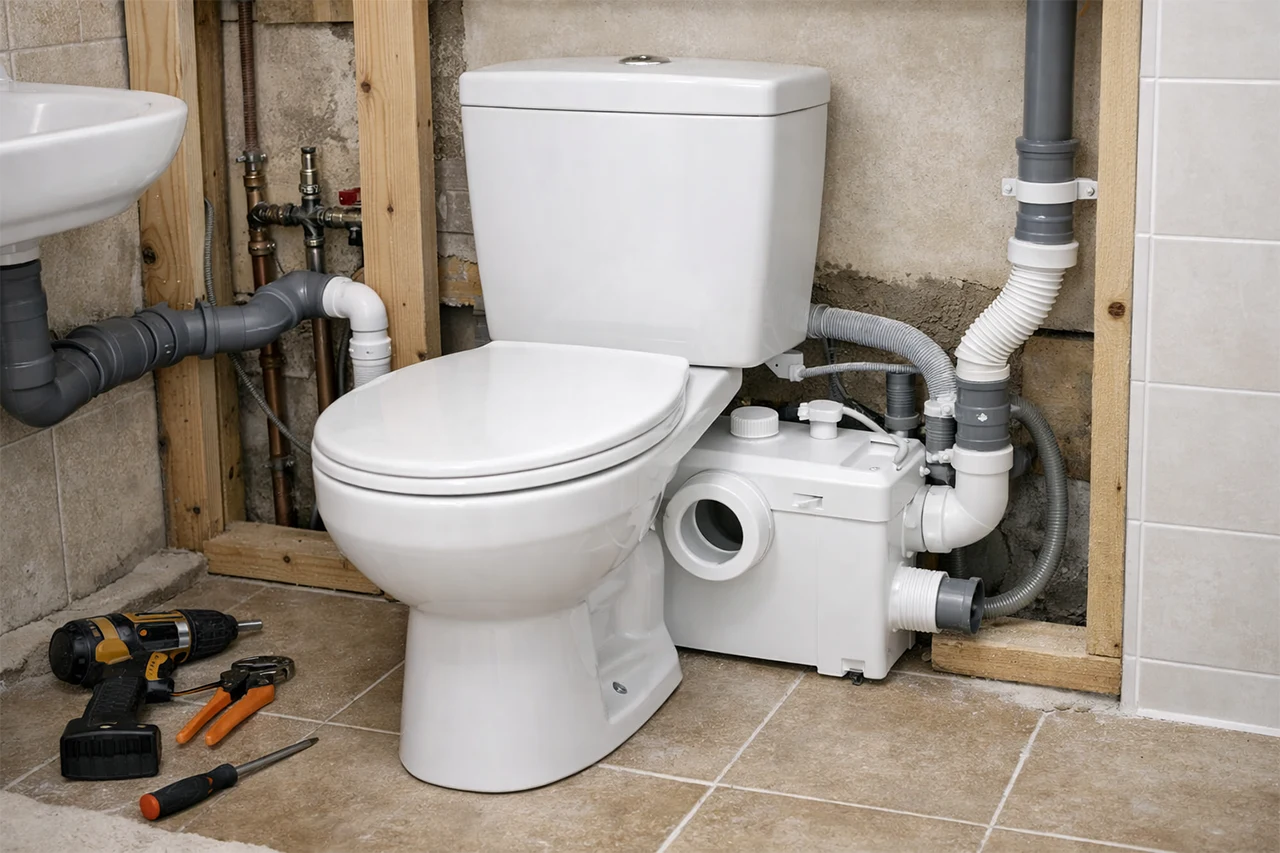
Installing a macerator system looks straightforward on paper, but it's nearly always worth bringing in a qualified plumber. They'll handle electrics and connections to the drainage system safely, and they'll know how to keep everything in line with current building rules.
Some experienced DIY homeowners do tackle simple swaps, but fixing mistakes with levels or wiring can get expensive fast. A professional will get the pipework gradient right, set up vents if needed, and make sure the spur and breaker are suitable for the load.
Once you and your installer choose a macerator pump and WC that match your room, the basic steps usually look like this:
Select the macerator, pan, and any toilet accessories or combined unit.
Position the box, then connect the pan outlet and cistern.
Add inlets from any shower trays, basins, or appliances you want to include.
Run the discharge pipework to the main stack or drainage system, staying within the recommended fall and distance limits.
Connect the power supply and thoroughly test the system.
In damp or hidden spaces, it often makes sense to use stainless steel fixings and clips so the installation remains secure over time.
Maintenance and Troubleshooting
Keeping a macerator in good condition is mostly about steady, simple care. Regular maintenance helps prevent a blockage, cuts down on odours, and keeps the motor running smoothly. It's worth using a macerator-safe descaler instead of harsh drain cleaners and choosing gentle cleaning products that won't damage the internal parts.
The system should only receive human waste and toilet paper, because wipes and other items can clog the unit very quickly.
Here are a few common issues and what they might mean:
Strange noises or frequent cycling. There may be trapped air or a partial blockage, so it's best to investigate early or call an engineer.
Slow drainage. This often suggests scale build-up, which a suitable descaler can help clear.
Pump cutting out. The motor might be overloaded, especially if it's not a heavy-duty model, so compare the symptoms with your manual.
Leaks or odours. Check the seals, cistern connections, and discharge joints to make sure everything's tight.
Before attempting repairs, it's wise to read the warranty terms to avoid accidentally voiding your coverage. If you're not confident with troubleshooting or maintenance, you can always contact the QS Supplies team for advice or to discuss installation support.
Costs and Budgeting
Adding a macerator is still an investment, but it often costs less than rebuilding your plumbing from scratch. In the UK, the typical cost of installing a macerator toilet typically ranges from £600 to £1,200, including labour and materials, depending on the unit and layout you choose.
Full bathroom renovation projects, by comparison, frequently start at around £5,000 and can increase significantly once tiling and layout changes are factored in. That's why a macerator can be less expensive to install than traditional toilets when you're adding a new bathroom rather than reworking the main stack.
Your total spend usually includes the unit itself, a plumber's time, and ongoing costs such as descaler, gentle cleaning products, and occasional servicing. Confident DIY renovators sometimes save on labour, but mistakes with the discharge run or electrics can quickly erase those savings.
It's also worth comparing warranty cover, since higher-end or heavy-duty units may offer better protection. Even in homes that use a solar panel system, the extra electrical load is modest because the pump system only runs for a short burst with each flush.
If you're comparing prices, QS Supplies offers a wide range of macerator pumps so you can balance cost and performance.
Add a Macerator Toilet to Your Bathroom
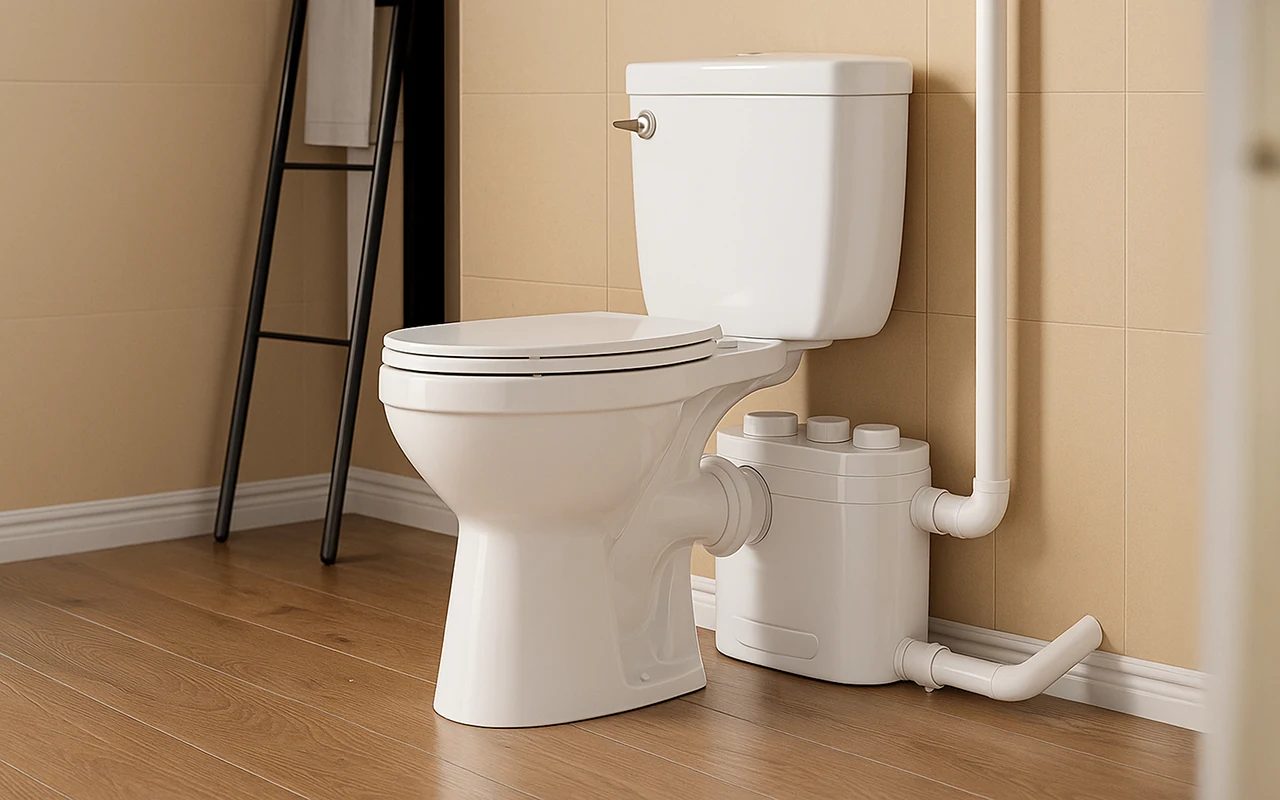
Macerator toilets are a practical way to add a new bathroom without major renovation, especially in basements, lofts, or other awkward corners of the house. With the right macerator pump, model type, and matching toilet accessories, the finished space will feel just like any other loo in daily use.
If you're ready to compare compact cloakroom units with more heavy-duty systems, you can browse macerator toilets and pumps at QS Supplies and find a setup that suits your layout and budget.
FAQ for Macerator Toilets
These FAQs answer common questions about how macerators work, where they fit, and what to expect in day-to-day use. They should help you decide if a system like this suits your home.
- What does a toilet macerator do?
- What are the disadvantages of a macerator toilet?
- Can you put toilet paper and waste in a macerator?
- How long do macerator toilets last?
- How much does it cost to fit a macerator toilet?